
Tabel Of Contents
- Is Nepal Suitable for Your First Trek as a Woman?
- What Should You Expect Before Starting Your First Trek in Nepal?
- What Does a Typical Day Look Like on a Nepal Trek?
- What Is Accommodation Like During a Trek in Nepal?
- What Food and Drinks Can You Expect During a Nepal Trek?
- What Is the Weather and Temperature Like During a Nepal Trek?
- What Physical Challenges Should You Expect on Your First Himalayan Trek?
- What Should Women Know About Personal Hygiene During a Nepal Trek?
- What Should You Pack for Your First Trek in Nepal as a Woman?
- What Is the Experience Like for Women Trekking in Nepal?
- Which Trek Should You Choose for Your First Trek in Nepal?
- Plan Your First Trek in Nepal With Women Adventures
- Frequently Asked Questions About Your First Trek in Nepal As a Woman
Your first trek in Nepal will probably be harder on your legs and easier on your nerves than you expect. On most beginner-friendly routes, you walk four to six hours a day on well-used trails, sleep in simple family-run teahouses with shared bathrooms, eat dal bhat and noodle soup, and follow a licensed guide who sets the pace and handles the logistics. You don't need previous trekking experience. You do need reasonable fitness, a suitable route, and realistic expectations about comfort and altitude.
How hard is it? What are the toilets like? Should you go alone or with a group? What about your period? The honest answer is usually "it depends": on the route, season, altitude, itinerary and level of support. A short walk to Poon Hill and a week in the Everest region are very different experiences. This guide takes you through the whole trek, from landing in Kathmandu to your last morning on the trail.
Is Nepal Suitable for Your First Trek as a Woman?
Yes. Nepal is one of the easier places in the world to start multi-day trekking, as long as you choose a route that matches your fitness and altitude experience. Not every Nepal trek is a beginner trek, though.
Several things make trekking in Nepal for beginners realistic:
- Routes for every level: From short treks sleeping below 3,500 m to long routes over 5,000 m passes.
- Established trails and teahouses: The Annapurna, Everest and Langtang regions have well-trodden paths and lodges every few hours, so no tent is needed.
- Guided trekking: Licensed guides come through registered travel agencies and are now required on most routes.
- Varied difficulty: "Moderate" and "strenuous" treks can differ by thousands of meters.
So, the itinerary matters more than fame. A first trek you finish feeling strong beats an ambitious one spent fighting headaches. Compare the highest sleeping altitude, daily hours, acclimatization days and how fast the route climbs.
What Should You Expect Before Starting Your First Trek in Nepal?
Much of your preparation happens before you reach the trail. A quick pre-departure checklist:
- Passport valid for six months, and a Nepal visa (on arrival for many nationalities; check yours)
- Travel insurance covering trekking to your maximum altitude and helicopter evacuation
- Passport details sent to your agency for permits
- Boots worn in on long walks
- Six to eight weeks of training
- Dietary needs and medical information shared with your agency
What Happens When You Arrive in Kathmandu?
On a guided trek, your agency usually meets you at Tribhuvan International Airport and takes you to your hotel. At a pre-trek briefing you meet your guide, review the itinerary, confirm permits and check equipment, so raise any concerns then. You continue by road or domestic flight, for example to Pokhara or Lukla, where weather delays make a spare day wise.
What Documents and Permits Do You Need for Trekking in Nepal?
Trekking permits in Nepal depend on the region:
- Annapurna region (Poon Hill, Mardi Himal): Annapurna Conservation Area Permit (ACAP) and TIMS card
- Langtang: Langtang National Park entry permit and TIMS card
- Everest region: Sagarmatha National Park entry permit and Khumbu Pasang Lhamu Rural Municipality permit
- Restricted areas: a special permit issued through a registered agency
Since April 2023, foreign trekkers have needed a licensed guide in most national parks and conservation areas. The Everest region's municipality hasn't applied the rule, while restricted areas always require one. Rules change, so confirm them with your agency, which normally arranges permits.
Do You Need to Buy or Rent Trekking Equipment in Nepal?
Bring anything that must fit well: boots, socks, base layers, sports bras and your daypack. Sleeping bags, down jackets and poles can be rented or bought in Kathmandu's Thamel area.
Quality varies, so check zips, cleanliness and temperature ratings, and ask whether your agency supplies these. With a porter, a 25–35 litre daypack fitted for a female torso is enough.
How Physically Fit Do You Need to Be for Your First Trek?
You should be able to walk five to six hours with a light pack, including long climbs and descents, and repeat it the next day. Endurance matters more than athleticism. To prepare:
- Take hilly three-to-five-hour walks at weekends
- Climb stairs, up and down, with a loaded daypack
- Do squats, lunges, step-ups and calf raises
- Test yourself with long walks on consecutive days
What Does a Typical Day Look Like on a Nepal Trek?
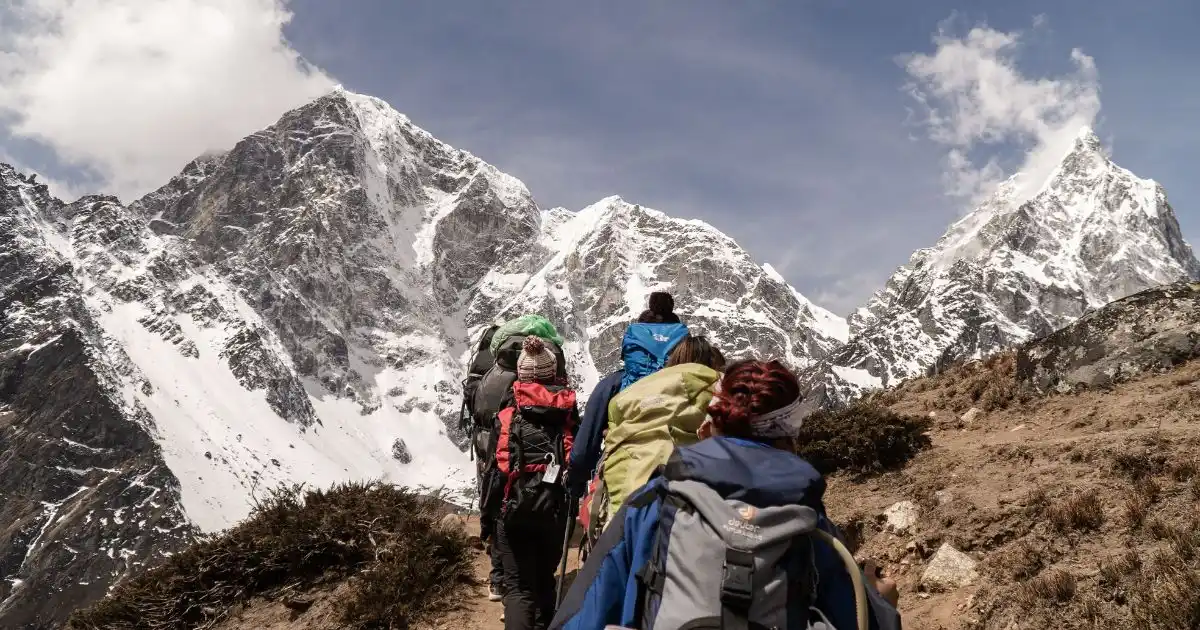
 A scenic Himalayan view during a typical day of trekking in Nepal
Most teahouse days follow a similar routine, though it varies by route, season and weather:
Approximate Time | What Happens |
6:00–7:00 am | Wake up, pack your bag for the porter, have breakfast |
7:30–8:00 am | Start walking while skies are clearest |
11:30 am–12:30 pm | Lunch at a teahouse along the trail |
1:00–3:00 pm | Afternoon walking with short breaks |
3:00–4:00 pm | Arrive, check in, rest and have a hot drink |
6:00–7:00 pm | Dinner and next-day briefing |
8:00–9:00 pm | Bed |
Walking hours aren't the same as trail time: lunch and breaks can turn a five-hour walk into a seven-hour walk day.
How Many Hours Do You Walk Each Day?
Most days involve about four to six hours of walking, though this varies with terrain, altitude and pace.
Walking Duration | General Description |
3–4 hours | Short trekking day |
4–6 hours | Moderate trekking day |
6–8+ hours | Longer trekking day |
These are examples, not fixed schedules. On Women Adventures' Mardi Himal itinerary, Dhampus to Deurali takes around six hours, Badal Danda to High Camp about three, and the descent to Siding around seven.
How Fast Do You Need to Walk?
Not fast. Guides often say bistarai, bistarai ("slowly, slowly"). On climbs, keep a pace at which you can still talk, take short regular breaks, and tell your guide if it feels too quick. A steady pace also helps you adjust to altitude.
What Is Accommodation Like During a Trek in Nepal?
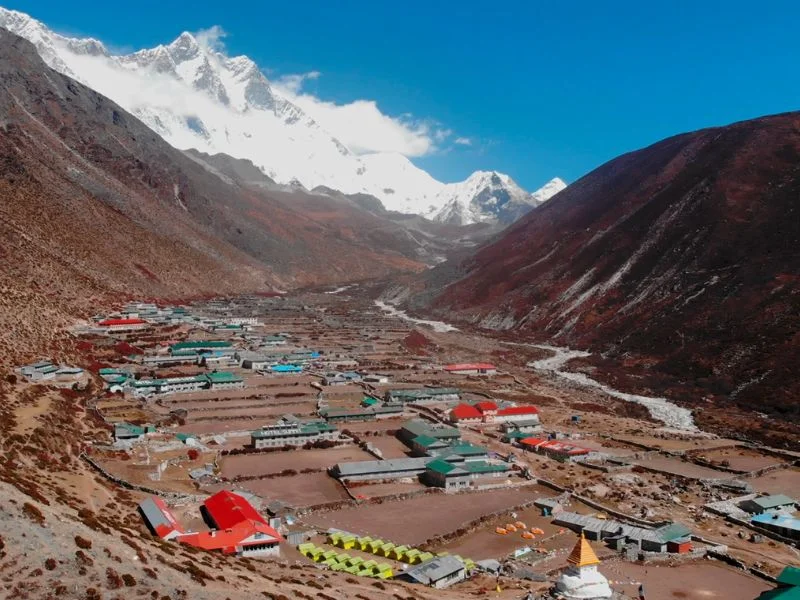 Teahouse accommodation in Nepal's Himalayas for trekkers during a multi-day trekking adventure
Teahouse accommodation is simple: usually a twin room with foam mattresses and pillows, shared toilets, and a heated dining room. Teahouses are welcoming but not hotels, and facilities get more basic the higher you go.
Facility | Lower-Altitude Villages | Higher-Altitude Locations |
Rooms | Twin; some attached bathrooms | Twin, thin walls, unheated |
Bathrooms | Western and squat | Mostly shared, often squat |
Showers | Hot showers fairly common | Bucket showers, extra cost |
Heating | Dining-room stove | Dining-room stove only |
Charging | Often available | Usually paid |
Wi-Fi and signal | Often available | Unreliable or absent |
This is a general pattern, not a rule. Facilities and prices vary by lodge, region and season.
Do You Have to Share a Room With Other Trekkers?
Twin-sharing is standard, and on a women-only trek your roommate is another woman. If you're traveling alone and want your own room, ask about single rooms and supplements before booking. They're easier to find in lower villages than in busy high-altitude lodges.
Are Bathrooms Shared on Nepal Treks?
Usually, yes. Expect Western-style and squat toilets, often bucket-flushed, with toilet paper (bring your own) going in a bin.
Can You Charge Your Phone and Access Wi-Fi During a Trek?
Usually, though higher up you'll often pay to charge in the dining room. Wi-Fi is often sold separately, and mobile signals are patchy in remote valleys. Bring a power bank and offline maps.
Can You Take a Hot Shower During a Trek?
Often at lower altitudes, using gas or solar-heated water, usually for a small charge. Higher up, showers are rare or come as a bucket of hot water, and many trekkers switch to a flannel wash.
What Food and Drinks Can You Expect During a Nepal Trek?
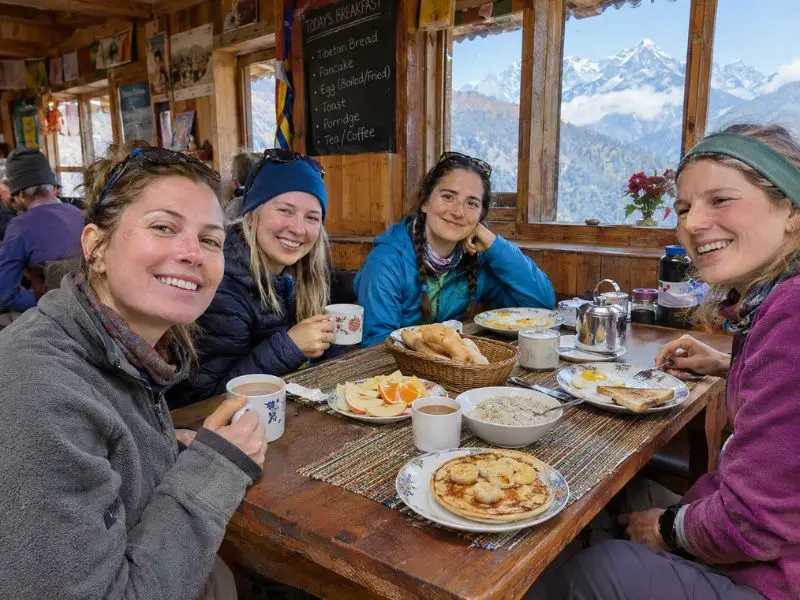 Female trekkers enjoying breakfast in Nepal treks
Trekkers in Nepal mostly eat teahouse meals: Nepali staples, Tibetan-influenced dishes and familiar favourites. Menus shrink and prices rise with altitude, as supplies are carried up.
Meal | Common Choices |
Breakfast | Porridge, Tibetan bread, pancakes, eggs, tea or coffee |
Lunch | Noodle soup, fried rice, vegetable soup, momos where available |
Dinner | Dal bhat (often with a second helping), thukpa, potatoes |
Drinks | Black tea, milk tea, ginger-lemon-honey tea, garlic soup |
Freshly cooked, filling meals gives the most energy, and drinking steadily matters as much as eating. Refill bottles with purified water rather than buying plastic.
Is Vegetarian Food Available During Nepal Treks?
Yes, widely. Dal bhat is vegetarian by default, and many trekkers avoid meat higher up, as it's often carried in for days unrefrigerated. Tell your agency your preferences before departure.
What Should You Eat Before and During a Trekking Day?
Porridge and eggs make a good breakfast, and lunch should be filling but not heavy. Between meals, nuts, dried fruit, energy bars and chocolate keep you going.
Can You Follow Special Dietary Requirements on a Nepal Trek?
Often, with planning. Vegan meals are possible, though ghee and milk are common. Gluten-free is harder, since bread, noodles and pancakes contain wheat, but rice, dal and potatoes don't. For allergies, tell your agency in writing and carry a card in Nepali. Not every teahouse can meet every requirement.
What Is the Weather and Temperature Like During a Nepal Trek?
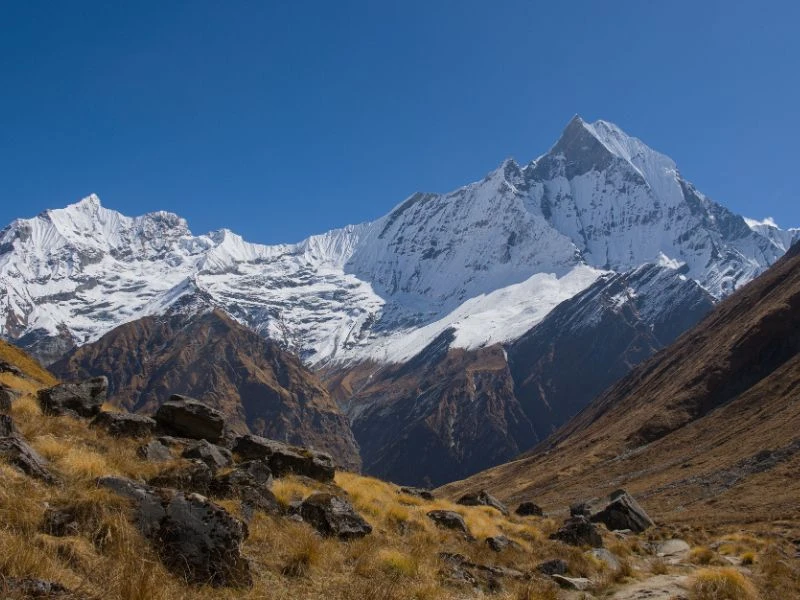 Trekking trail in the Nepal Himalayas showing mountain conditions during a trek
The weather depends on the season, altitude, and region. Days are usually mild lower down, and nights get colder as you climb, with temperatures falling roughly 6.5°C per 1,000 m.
Season | Months | Typical Conditions |
Spring | March–May | Mild, rhododendrons in bloom, some haze and afternoon showers |
Monsoon | June–August | Frequent rain, cloud, leeches and landslide risk |
Autumn | September–November | Clearest skies, stable weather, busiest trails |
Winter | December–February | Cold nights, snow higher up, quieter trails |
Routes differ: Poon Hill is often walkable in winter, but snow can close Mardi Himal's upper sections, and winter nights at Tengboche fall well below freezing.
Does It Get Cold During a Nepal Trek?
Yes, in mornings and evenings. You might walk in a T-shirt at midday and need a down jacket by 5 pm. Bedrooms are unheated, so bring a properly rated sleeping bag.
Can You Experience Rain or Snow During Your Trek?
Yes, in any season. Rain makes stone steps slippery, cloud hides views, and snow can make upper sections unsafe or delay flights, so your guide may adjust plans.
What Should You Wear in Different Weather Conditions?
Layers: a base layer, fleece and waterproof shell for walking, plus a down jacket, hat and gloves for cold mornings and evenings, and boots with good grip. See the full packing list below.
What Physical Challenges Should You Expect on Your First Himalayan Trek?
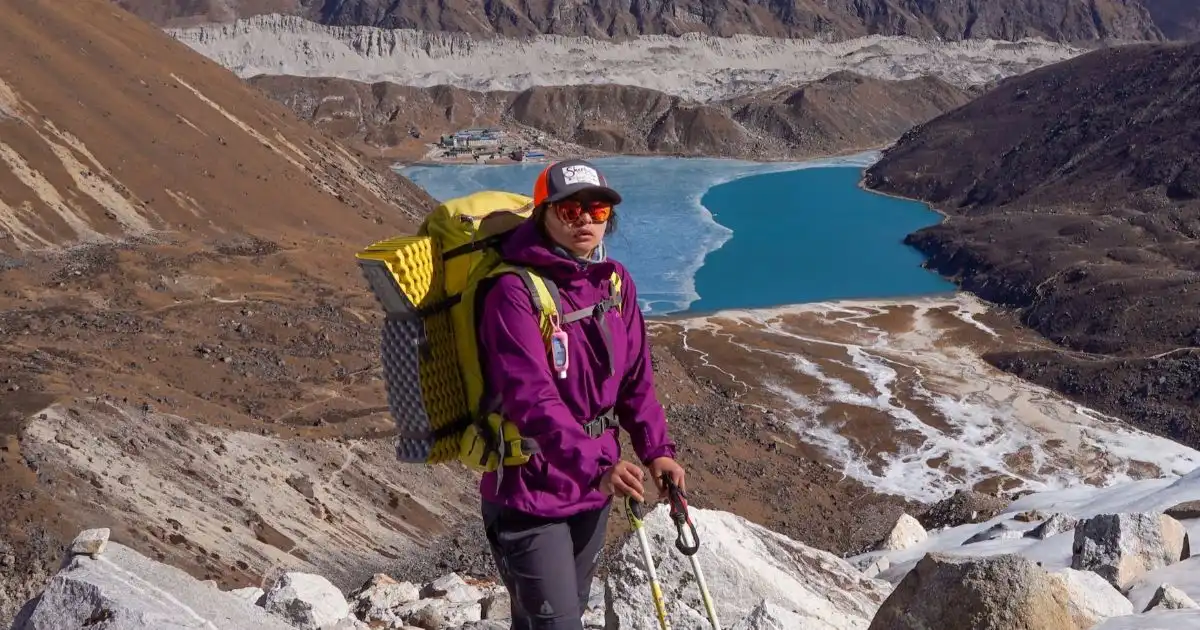
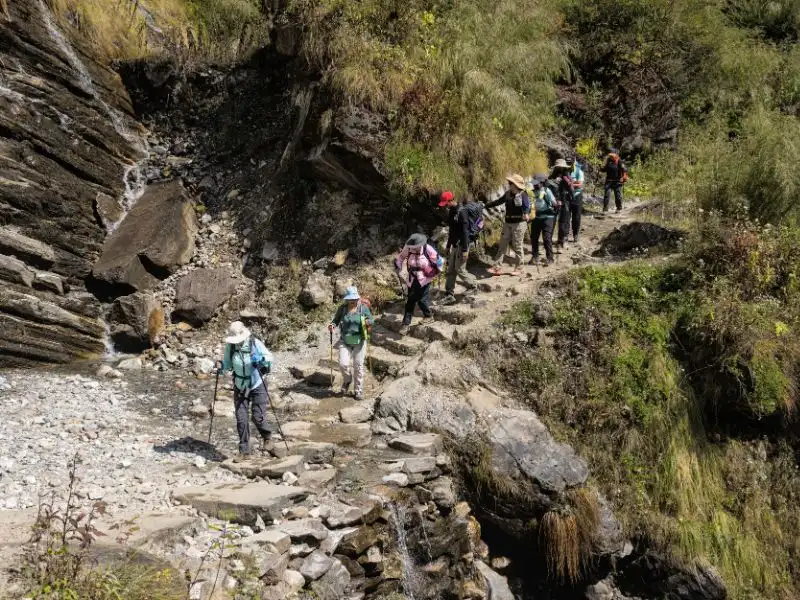 Female trekkers trekking on uneven ground and stone staircases on a steep Himalayan mountain trail in Nepal, facing the physical challenges of high-altitude trekking
The hardest part is rarely one big climb. It's walking day after day on steep, uneven ground. Expect:
- Long climbs and stone staircases, like the one above Ulleri on the Poon Hill route
- Steep, knee-testing descents on rocky, uneven trails
- Soreness and fatigue building over consecutive days
- Carrying a daypack for hours
- Slower walking at altitude
How Does Altitude Affect Your Trekking Experience?
Higher up, each breath holds less oxygen, so effort feels harder. Acute mountain sickness (AMS) can affect anyone above about 2,500 m, regardless of fitness, and gradual ascent is the best prevention. Wilderness medicine guidance suggests that above 3,000 m you raise your sleeping altitude by no more than about 500 m a day, with a rest day every three to four days.
Normal Tiredness | Possible AMS: Tell Your Guide | Emergency: Descend |
Heavy legs, sore muscles, breathlessness that eases when you stop | Headache with nausea, loss of appetite, dizziness, poor sleep | Confusion, loss of coordination, breathlessness at rest |
Note: Never climb higher with AMS symptoms and talk to your doctor before you travel.
Are Rest Days Included in a Nepal Trek?
On itineraries sleeping above about 3,000 m, they should be. An acclimatization day usually means a short hike higher before sleeping lower ("climb high, sleep low"), with Namche Bazaar the classic Everest-region stop. Lower routes like Poon Hill rarely need one.
What Should Women Know About Personal Hygiene During a Nepal Trek?
Expect fewer showers, shared toilets and limited water, and carry your own supplies.
- Washing: treat showers as a bonus; wipes and a flannel wash cover the gaps.
- Hand hygiene: sanitise before meals and after toilet stops to avoid stomach upsets.
- Clothing: quick-dry underwear can be rinsed and dried overnight.
- Waste: carry used products out in sealed, opaque bags. Never flush, burn or bury them.
What Personal Hygiene Products Should You Carry?
Keep tissues, sanitizer, biodegradable wipes, a quick-dry towel, and opaque waste bags in a small daypack pouch. The full list is below, and our guide to female hygiene while trekking covers more.
How Do You Manage Menstrual Hygiene During a Trek?
Pack your full supply plus extra, as travel and altitude can affect your cycle. Cups work if you can wash your hands and boil water. Double-bag used pads and tampons and carry them out. See our guide to managing your period while trekking.
What Should You Pack for Your First Trek in Nepal as a Woman?
What you pack depends on the route, season, altitude, and duration. A spring trek to Poon Hill needs less than a winter week near Everest.
What Clothes Should You Wear for Your First Nepal Trek?
Essential: moisture-wicking base layers, trekking trousers, a fleece, a waterproof and windproof jacket, comfortable underwear, supportive sports bras, moisture-wicking socks, a warm hat, gloves and a sun hat.
Route- and season-dependent: a down or insulated jacket, thermal leggings and waterproof trousers.
Layering matters because temperatures swing sharply between midday and evening.
What Footwear Do You Need for Trekking in Nepal?
Choose boots or trekking shoes with a good grip, with ankle support for rocky or snowy routes, and break them in on long walks before you leave. The right choice depends on the trail, conditions, and your comfort.
What Personal Hygiene Items Should Women Carry?
- Toothbrush and toothpaste
- Hand sanitizer
- Toilet paper or tissues
- Quick-dry towel
- Biodegradable soap
- Menstrual products if needed
- A small hygiene pouch
- Waste bags
- Sunscreen and lip balm
Mountain villages have limited waste disposal, so carry out what you carry in.
What Should You Keep in Your Daypack?
Water, snacks, a rain jacket, sunscreen, sunglasses, a warm layer, personal medication, ID and permit copies, your hygiene pouch and a power bank. Trekking poles are optional but help on descents.
What Is the Experience Like for Women Trekking in Nepal?
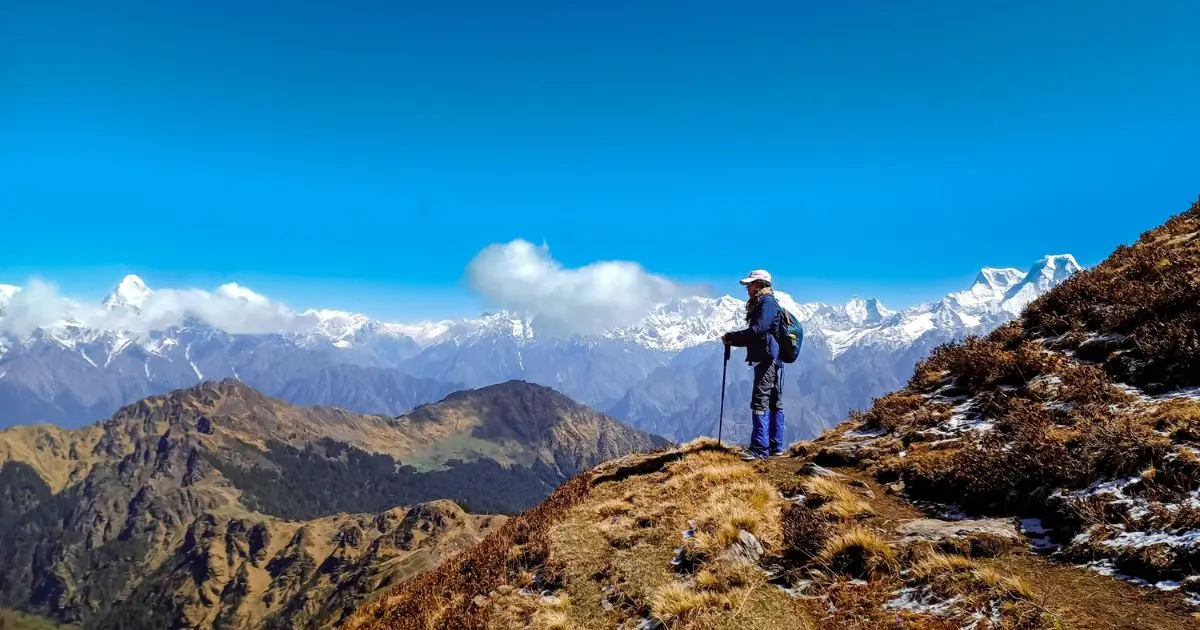
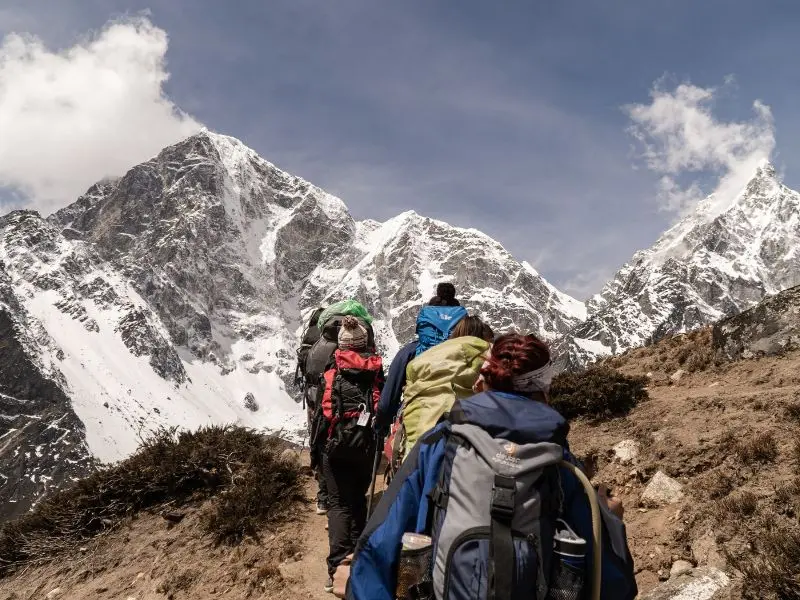 Women trekkers enjoying a guided trekking experience along a scenic Himalayan trail in Nepal
Every woman's concerns are different, and many find the trail more sociable than expected.
- Guides: Most guides in Nepal are men, but qualified female guides are increasingly available.
- Other trekkers: Evenings around the dining room stove are sociable.
- Privacy: Walls are thin, so many women change inside their sleeping bag.
- Village etiquette: Cover shoulders and knees, ask before photographing people, and walk clockwise around stupas.
- Your needs: Telling your guide about cramps, toilet stops or tiredness is normal.
Can You Trek in Nepal Alone as a Woman?
Travelling to Nepal alone is common. Trekking without a guide is different: most routes in national parks and conservation areas now require a licensed guide through a registered agency, with the Everest region as the main exception. For a solo woman, the practical choice is a private guided trek or a scheduled women group.
What Is It Like to Trek With a Female Guide in Nepal?
A female guide does the same job as any guide. For some women, though, it's simply easier to mention a period or ask for a bathroom stop with another woman. Licensing, experience and first-aid training still matter most. Learn more about hiring a female trekking guide in Nepal.
Is a Women-Only Trek a Good Choice for Your First Trek?
For many first-timers, yes. Your roommate is another woman, conversations about blisters or periods aren't awkward and solo travellers get built-in company. Women Adventures runs women-only trekking in Nepal with female guides, on both fixed group departures and private trips.
Which Trek Should You Choose for Your First Trek in Nepal?
The best beginner treks in Nepal fit your fitness, time and altitude experience. These four Women Adventures routes suit different first-timers.
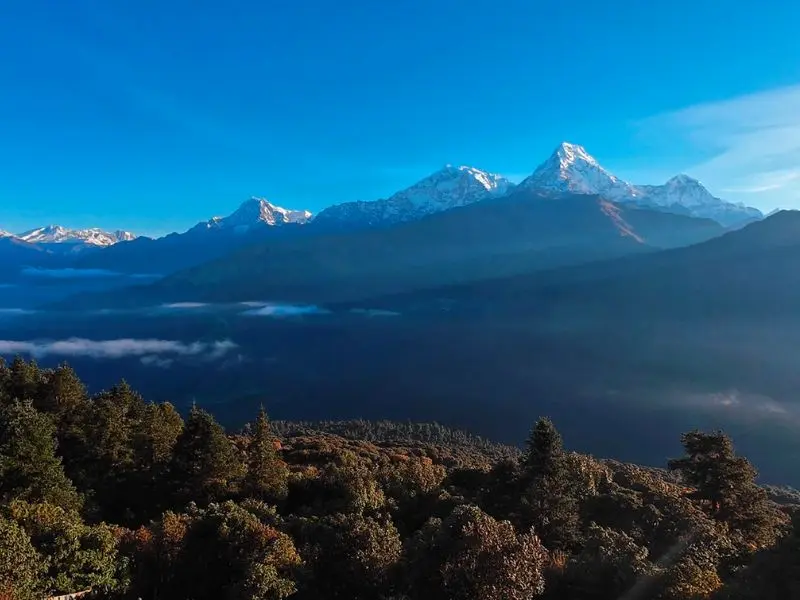 Ghorepani Poon Hill Trek in Nepal featuring panoramic views of the Annapurna and Dhaulagiri mountain ranges.
Ghorepani Poon Hill Trek
Ghorepani Poon Hill is a popular introduction to the Annapurna region. From near Pokhara, the trail climbs the stone steps above Ulleri through rhododendron forest and Gurung and Magar villages. You sleep at Ghorepani (around 2,860 m) and climb Poon Hill (3,210 m) for sunrise over Dhaulagiri and the Annapurnas. With good teahouses and modest altitude, it suits beginners short on time.
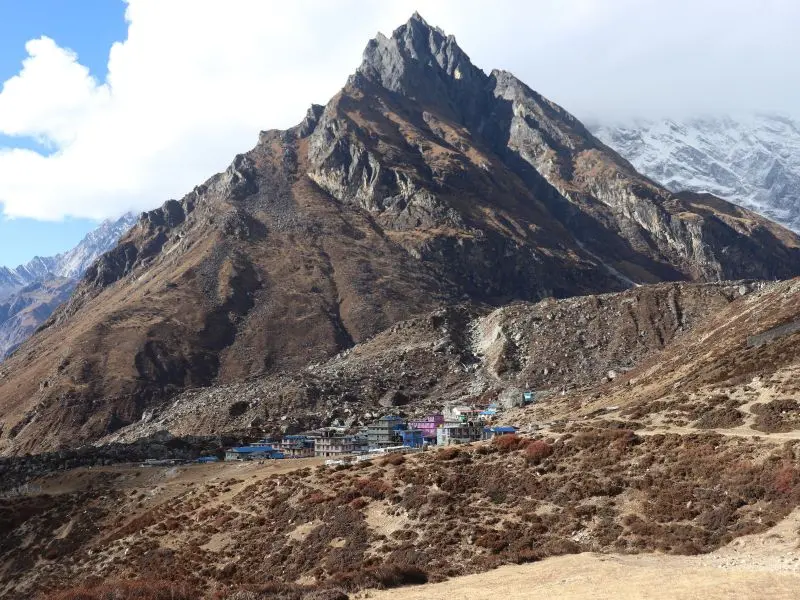 Langtang Valley Trek in Nepal featuring scenic Himalayan landscapes, mountain views, and traditional mountain villages.
Langtang Valley Trek
North of Kathmandu, Langtang Valley trek follows the Langtang Khola through forest into a glacial valley of Tamang villages. Height comes gradually, but altitude matters: you sleep at Kyanjin Gompa (around 3,870 m), with optional climbs to Kyanjin Ri (around 4,773 m) or Tserko Ri (around 4,984 m). After the August 2026 flood damaged road access near Syabrubesi, the Trekking Agencies' Association of Nepal reported the valley open again in late October 2026; check current access before booking.
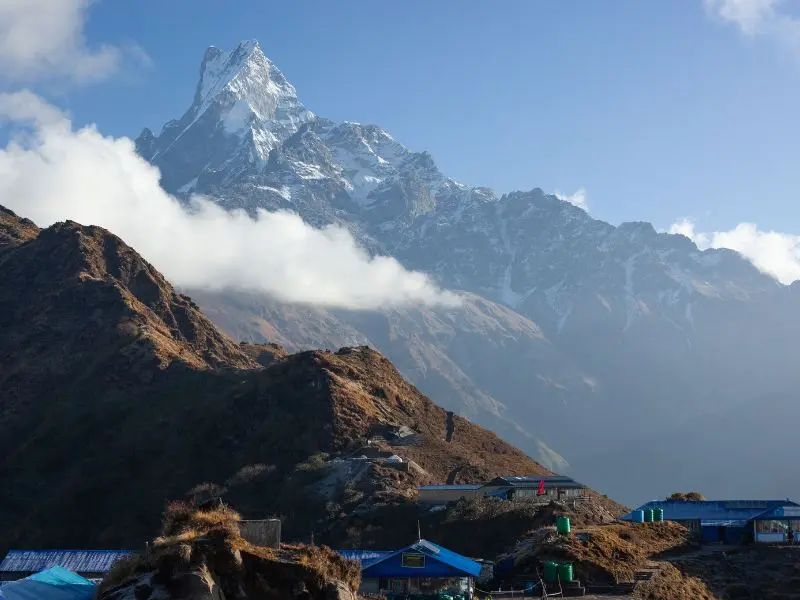
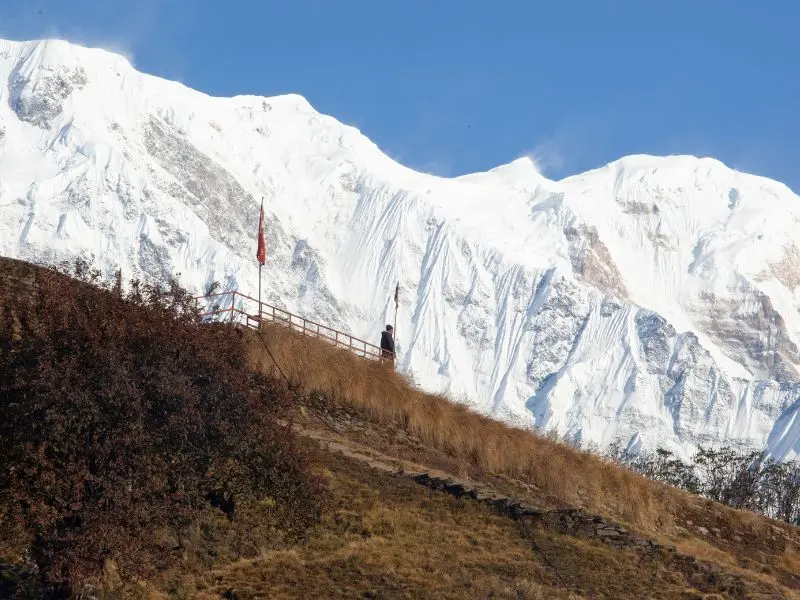 Mardi Himal Trek in Nepal featuring breathtaking views of Machhapuchhre and the Annapurna mountain range.
Mardi Himal Trek
Mardi Himal combines quiet forest trails with a ridge walk beneath Machhapuchhre. The Women Adventures 7-day Mardi Himal Trek itinerary goes from Dhampus through Forest Camp and Badal Danda (3,345 m) to High Camp (3,700 m), then to the viewpoint at around 4,500 m. The steep, exposed and sometimes snowy upper sections make it a trek for fit first-timers, not an easy beginner option.
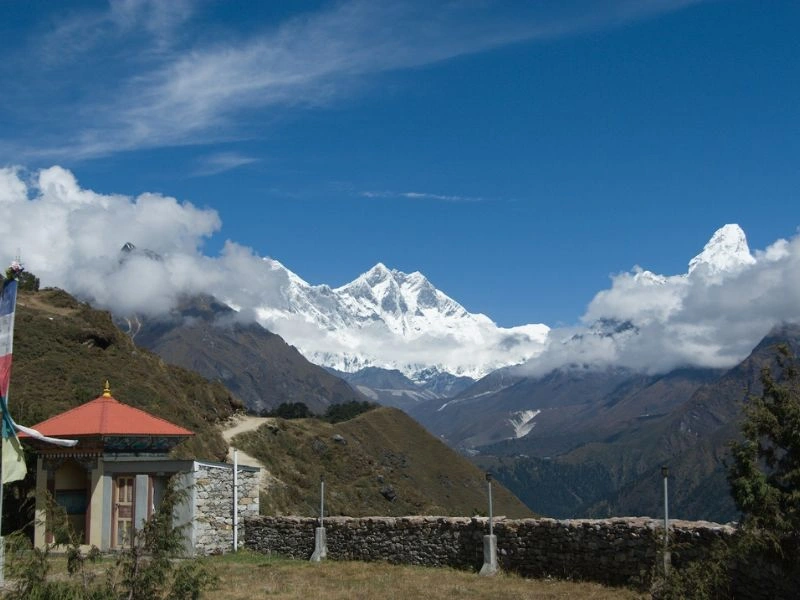 Everest Panorama Trek in Nepal offering stunning views of Mount Everest and the surrounding Himalayan peaks.
Everest Panorama Trek
Everest Panorama Trek route introduces the Everest region without Base Camp's altitude. The Women Adventures 7-day itinerary runs from Lukla via Phakding and Namche Bazaar to Tengboche (around 3,860 m), returning through Monjo, with views of Everest, Lhotse and Ama Dablam. Acclimatization still matters.
How Do You Choose the Right Trek for Your Fitness and Experience?
Trek | Approximate Duration | Maximum Elevation | Highest Sleeping Altitude | General Consideration |
Ghorepani Poon Hill | 6 days | 3,210 m (Poon Hill) | ~2,860 m (Ghorepani) | Stone steps, lowest altitude |
Langtang Valley | 8 days | ~4,984 m (Tserko Ri, if included) | ~3,870 m (Kyanjin Gompa) | Higher altitude; check access |
Mardi Himal | 7 days | ~4,500 m (viewpoint) | 3,700 m (High Camp) | Steeper upper sections |
Everest Panorama | 7 days | ~3,880 m (Everest View Hotel) | ~3,860 m (Tengboche) | Altitude, flight delays |
Consider your available days, whether you've been above 3,000 m, and how much challenge you want. See choosing the right trek for women for more.
Plan Your First Trek in Nepal With Women Adventures
Your first Himalayan trek doesn't need to be the longest or hardest route. The right itinerary, steady preparation, and realistic expectations make it more comfortable and rewarding.
Women Adventures is a women-focused trekking agency in Nepal running women-only treks with female guides. When you get in touch, share your experience and fitness, preferred destination, dates, trip length, and whether you'd like a scheduled women-only group or a private trek.
Planning your first trek in Nepal? Explore Women Adventures' women-only trekking itineraries and find a Himalayan adventure that matches your interests, fitness level and travel plans.
Frequently Asked Questions About Your First Trek in Nepal As a Woman
Can a Beginner Go Trekking in Nepal?
Yes. Many routes suit people with no trekking experience, especially shorter, lower-altitude treks like Ghorepani Poon Hill. Choose a route that matches your fitness, train beforehand and pick an itinerary with sensible distances and acclimatization.
Do I Need to Be Fit for My First Trek in Nepal?
You need walking endurance rather than athletic fitness: five to six hours of hilly walking on consecutive days. Six to eight weeks of long walks, stair climbing and leg strength work make a real difference.
How Many Hours Do You Walk Each Day on a Nepal Trek?
Usually four to six hours, though some days are three and others more than eight, depending on itinerary, terrain and altitude. Breaks and lunch add to your total time on the trail.
What Is Accommodation Like During a Nepal Trek?
Mostly teahouses: simple family-run lodges with twin rooms, shared bathrooms and a heated dining room. Facilities are more basic higher up, where hot showers, charging and Wi-Fi often cost extra.
What Food Do You Get on a Nepal Trek?
Teahouses serve dal bhat, noodle soup, fried rice, momos, eggs, potatoes, porridge and pancakes, plus plenty of tea. Vegetarian food is easy to find. Menus get shorter and pricier at higher altitudes.
Is Trekking in Nepal Safe for Women Travelling Alone?
Many women travel to Nepal alone and trek without problems, but safety depends on preparation, route choice and conditions. A licensed guide, now required on most routes, adds support with altitude, weather and emergencies. A women-only group is another option.
Should Women Choose a Female Trekking Guide in Nepal?
A female guide can make it easier to discuss periods, privacy or health concerns. Whoever you choose, check that they are licensed, experienced on your route and trained in first aid. Professionalism matters more than gender alone.
Can I Join a Group Trek in Nepal If I Am Travelling Alone?
Yes. Many agencies run scheduled departures that solo travellers can join, and women-only groups pair you with a female roommate. Women Adventures offers fixed women-only departures as well as private treks.
What Is the Best Trek in Nepal for First-Time Female Trekkers?
No single trek suits everyone. Poon Hill offers a shorter, lower-altitude introduction, Mardi Himal suits fit beginners wanting a challenge, and Everest Panorama and Langtang Valley offer higher-altitude experiences with careful acclimatization.
What Is the Best Time for a First Trek in Nepal?
Autumn (September–November) and spring (March–May) offer the most stable weather and best views. Winter suits lower routes but brings cold nights and snow higher up, while the monsoon brings rain and clouds. The right time depends on your route.