
Tabel Of Contents
- Can You Go Trekking During Your Period?
- What Changes When You Get Your Period on a Himalayan Trek?
- How to Manage Your Period During a Himalayan Trek
- Which Menstrual Product Is Best for Trekking?
- What Should You Pack for Your Period on a Himalayan Trek?
- What Are Toilets Like on a Himalayan Trek?
- How Should You Dispose your Period Products While Trekking?
- Can You Use a Menstrual Cup on a Himalayan Trek?
- Does High Altitude Affect Your Period?
- Managing Your Period at Night During a Trek
- What Is Menstruation Like in Nepal's Trekking Environment?
- How Can a Female Trekking Guide Help During Your Period?
- Are Women-Only Treks More Comfortable During Your Period?
- Practical Period Checklist for a Himalayan Trek
- Final Thoughts: Your Period Doesn't Have to Stop Your Himalayan Adventure
- Frequently Asked Questions About Trekking During Your Period
Getting your period on a Himalayan trek is not a crisis. It is a logistics problem, and logistics problems can be solved with preparation.
This guide covers what actually changes when you menstruate on a multi-day trek in Nepal, how to manage hygiene when water is scarce, which menstrual products suit trekking conditions, what the toilets are really like, and how to tell ordinary period symptoms apart from the warning signs of altitude illness.
Can You Go Trekking During Your Period?
Yes, many women can go trekking during their period. With the right menstrual products, hygiene supplies, preparation and support, menstruation does not automatically prevent you from completing a Himalayan trek.
Women trek during their periods on the Everest Base Camp, the Annapurna Base Camp, the Langtang Valley Trek and Manaslu Circuit Trek every single season. What determines how comfortable the experience comes down to a handful of factors:
- Your usual menstrual flow and symptoms
- Sustained physical exertion over consecutive days
- Long walking days, often six to eight hours
- Altitude and cold temperatures
- Bathroom access along the trail and at teahouses
- Hygiene and access to clean water
- Waste disposal in remote areas
- Your own comfort threshold
Everyone's menstrual experience is different. A woman with a light two-day period and no cramping faces a very different practical situation from a woman with heavy bleeding and significant pain. Neither is a reason to cancel a trek by default, but the preparation looks different.
What Changes When You Get Your Period on a Himalayan Trek?
The biggest difference usually isn't the period itself. It's the environment you're managing it in.
At home, you may have a private bathroom, hot water, a bin, a supply cupboard, and the option to lie down. On a Himalayan trek you have:
- Long walking days with limited flexibility in the schedule
- Limited privacy, especially between villages
- Basic toilet facilities, which vary enormously by route and altitude
- Limited access to water, and often no hot water
- Cold weather, which makes changing products and washing far less appealing
- Physical fatigue on top of any menstrual tiredness
- Changes in sleep and routine from early starts and shared rooms
- Remote locations hours or days from a pharmacy
- Limited access to your preferred products, particularly above the larger villages
Travel, physical exertion, stress and disrupted routine can affect how some women experience their cycle. You may find your period arrives earlier or later than expected, or that symptoms feel different from usual. This is common among travelers generally, and it isn't something to panic about. What it does mean is that planning around an exact predicted date is unwise.
How to Manage Your Period During a Himalayan Trek
Here is the practical sequence, from packing at home to your last night in a teahouse.
Before You Start the Trek
- Track your expected dates. Even a rough estimate tells you whether to prepare for a period during the trek, immediately before, or not at all.
- Pack your preferred menstrual products. Bring what you already use and trust.
- Bring extra supplies. More than you think you need. Cycles shift when you travel.
- Prepare a small personal period kit so everything lives in one pouch rather than scattered through your duffel.
- Carry extra underwear. Two or three spare pairs make a real difference.
- Pack sealable bags for used disposable products.
- Don't experiment with a completely new product for the first time on the trek. A trek is the wrong place to learn how a menstrual cup works.
- Keep essential supplies in your daypack, not in the duffel your porter carries. You and your duffel are frequently in different places during the day.
Do not plan to buy your preferred products along the trekking routes. Kathmandu and Pokhara have good pharmacies and supermarkets. Larger trailhead villages stock some basics. Higher up, availability is limited, expensive, and unpredictable, and specific brands or absorbencies are rarely available.
During the Trekking Day
- Keep products where you can reach them without unpacking your whole bag.
- Carry toilet paper or tissues; teahouse toilets often don't supply them.
- Carry hand sanitizer and keep it accessible.
- Use proper facilities when you pass them rather than waiting for a better option.
- Plan product changes around tea stops and lunch stops, which is where usable toilets are.
- Stay hydrated throughout the day.
- Eat regularly, even if your appetite drops.
- Take rest breaks when you need them.
- Adjust your pace to how you feel. A slower day is still a completed day.
Menstruating is not a reason to stop trekking. It's a reason to build a little more flexibility into the day.
How to Manage Period Hygiene When Water Is Limited
Hygiene on the trail is about consistency rather than perfection.
- Wash your hands with soap and water whenever it's available, especially before and after changing a product.
- Use hand sanitizer when water is not available, which will be most of the time.
- Carry personal wipes for cleaning up when washing isn't practical. Pack out used wipes; they don't break down and shouldn't go into teahouse systems.
- Change underwear regularly and keep clean and used clothing in separate bags.
- Use available clean water sensibly. Water at higher altitudes is carried, boiled, or paid for, so use what you need and no more.
- Adjust your expectations. You will not be as clean as you are at home for several days. Focus on hand hygiene and changing products often, which are the parts that actually matter.
What If Your Period Comes Unexpectedly?
This is one of the most common anxieties among first-time trekkers, and it's easily managed.
- Carry emergency supplies even when your period isn't due.
- Keep two or three products in your daypack at all times.
- Tell your female trekking guide if you need help. She has almost certainly dealt with this before.
- Ask your guide which teahouses ahead have the better facilities.
- Don't feel embarrassed. Periods are an ordinary part of life, and on a trek they're an ordinary part of logistics.
- Women trekking together often help one another out with spare supplies.
A female trekking guide in Nepal makes this conversation considerably easier for many women, simply because it doesn't have to be a conversation about anything unusual.
How to Manage Period Cramps and Discomfort While Trekking
Practical measures that fit trekking conditions:
- Take more frequent, shorter rest breaks
- Slow your walking pace rather than pushing through
- Stay well hydrated
- Eat regularly to keep energy stable
- Wear comfortable, non-restrictive layers around your waist and hips
- Use the comfort strategies that already work for you at home
- Carry any medication you already use routinely or that has been recommended to you by your own healthcare provider
Bring your own supply of anything you normally take. Don't count on buying it on the trail, and don't rely on other trekkers' medication.
What If You Have Heavy Bleeding or Severe Symptoms?
Listen to your body and take unusual symptoms seriously rather than filing them under “just my period.”
Tell your guide and seek medical advice if you experience:
- Severe or unusual pain
- Bleeding much heavier than your normal
- Fainting or near-fainting
- Severe weakness
- Shortness of breath
- Feeling significantly unwell in a way you can't explain
- Any symptoms that could indicate altitude illness
The distinction matters. Mild cramping, low energy, and a headache you recognize from home are one thing. A headache that won't respond to rest, breathlessness at rest, confusion, loss of coordination or persistent vomiting are potential signs of altitude-related illness and need to be treated as such, regardless of where you are in your cycle.
Which Menstrual Product Is Best for Trekking?
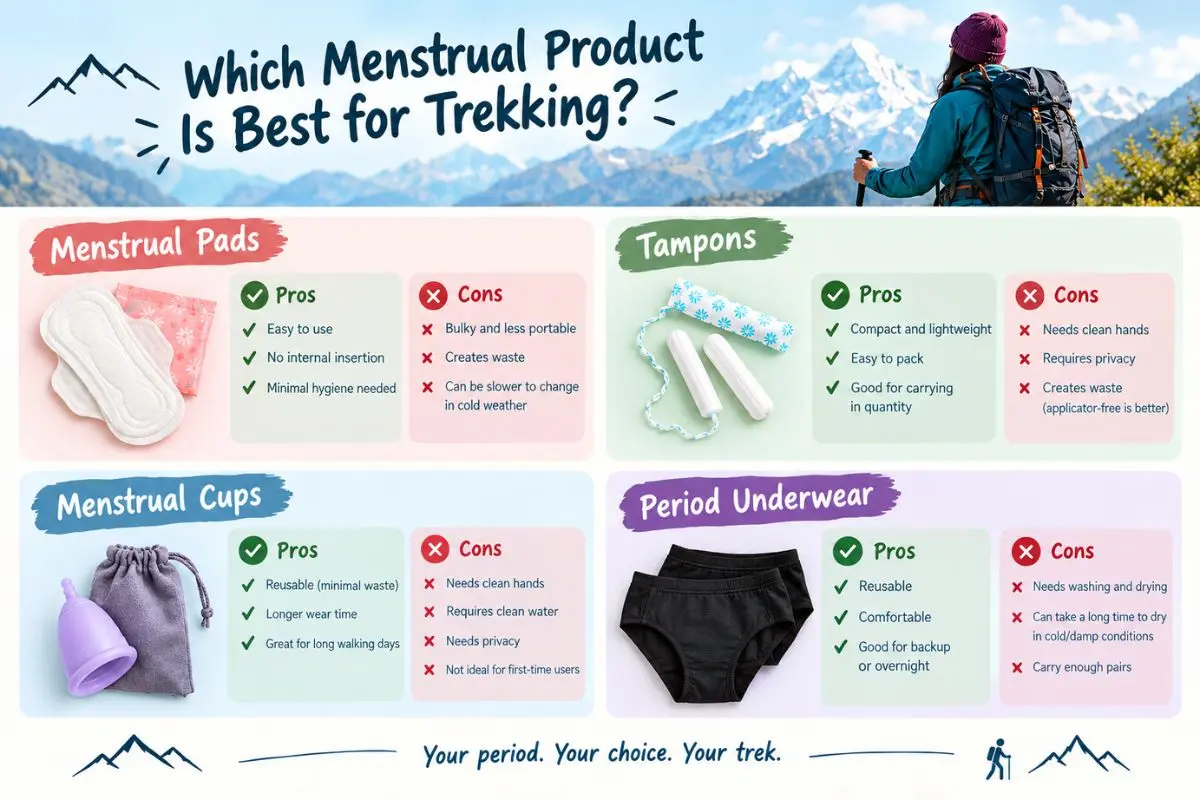
There is no single best product. The best product for trekking is the one you already use confidently, adjusted for waste, water, and privacy constraints.
Menstrual Pads
Simple, familiar, and require no internal insertion or clean hands beyond basic hygiene, which is genuinely useful when water is scarce. The trade-off is bulk and waste: every pad has to be carried out with you where disposal isn't available. Cold weather and multiple layers can also make changing them slower.
Tampons
Compact, light and easy to pack in quantity. Changing one requires clean hands and a moment of privacy, and every used tampon and applicator becomes a waste you carry. Applicator-free tampons reduce both bulk and rubbish considerably.
Menstrual Cups
Reusable, produce almost no waste and can usually be worn for longer stretches than pads or tampons, which suit long walking days. The catch is cleaning: you need clean hands, clean water and privacy to empty and rinse. A cup is an excellent trekking option for women already comfortable using one, and a poor choice for a first timer.
Period Underwear
Useful as a backup layer, as overnight protection, or as a primary option on lighter days. The limitation on the trek is washing and drying. At altitude, in cold and often damp conditions, thick underwear can take more than a day to dry. Bring enough pairs that you're not depending on a fast turnaround.
Which Product Should You Choose?
| Product | Main advantage | Main challenge | Trekking consideration |
| Pads | Easy to use | Creates waste | Pack-out required where disposal isn't available |
| Tampons | Compact | Creates waste | Carry used products where necessary |
| Menstrual cup | Reusable | Needs cleaning | Best for women already familiar with it |
| Period underwear | Reusable | Washing and drying | Useful as backup or for familiar users |
Many women use a combination: a cup or tampons during walking hours, pads or period underwear at night.
What Should You Pack for Your Period on a Himalayan Trek?
Essential Period Supplies
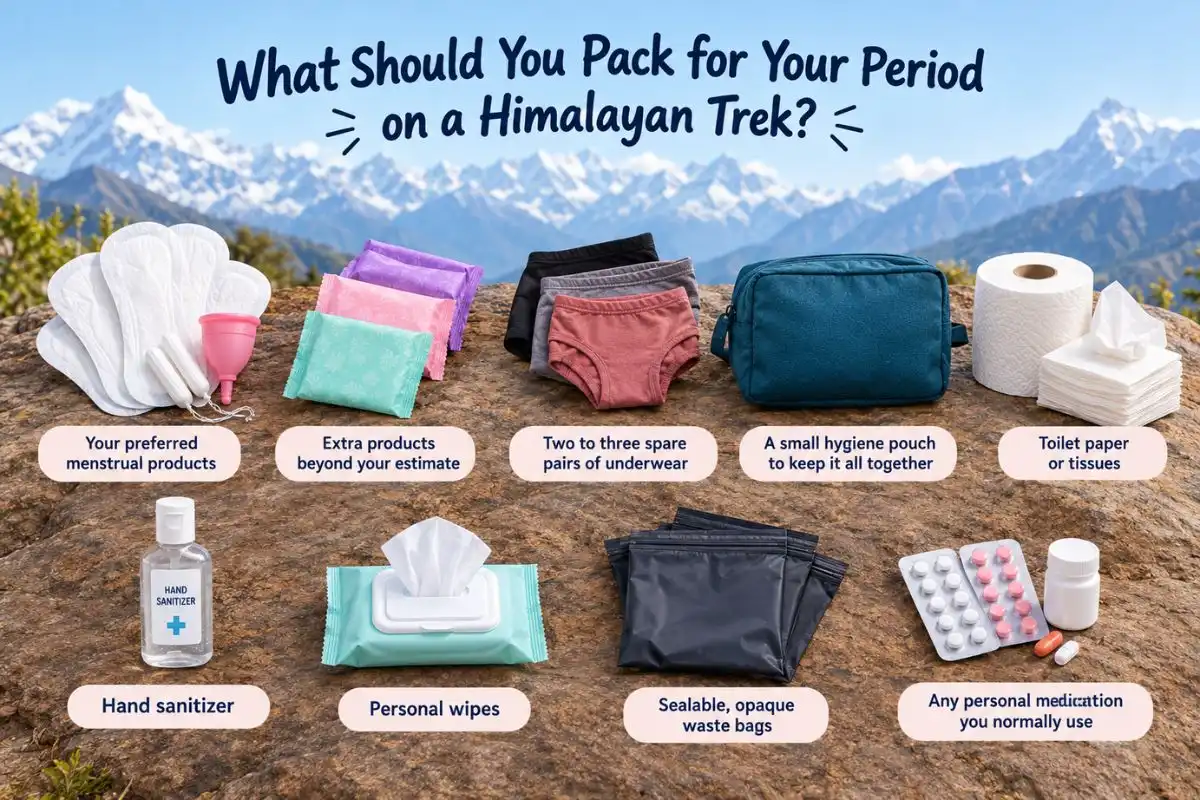
- Your preferred menstrual products
- Extra products beyond your estimate
- Two to three spare pairs of underwear
- A small hygiene pouch to keep it all together
- Toilet paper or tissues
- Hand sanitizer
- Personal wipes
- Sealable, opaque waste bags
- Any personal medication you normally use
How Many Period Products Should You Bring?
Rather than a fixed number, calculate it:
Your typical period length × your typical daily usage + several extra days' worth.
The buffer covers a cycle that arrives early, runs long, or behaves differently than usual. Add a little more if you tend to change products frequently, since you may change more often than at home simply because washing options are limited.
Keep at least a day's worth in your daypack. The rest can travel in your duffel.
What Are Toilets Like on a Himalayan Trek?
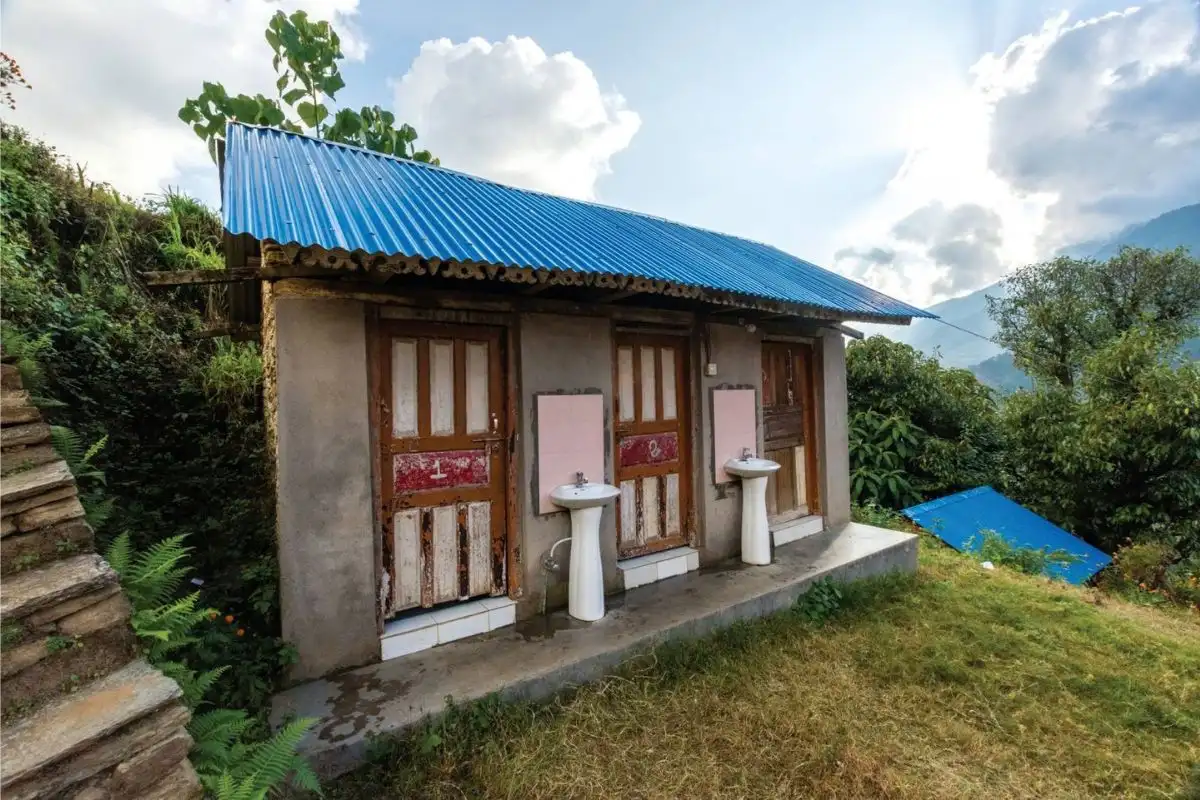
Facilities vary far more than most first-time trekkers expect. What you find depends on the trekking route, the altitude, the specific village, the teahouse, and the standard of accommodation you've booked.
You may encounter:
- Western-style seated toilets, common in lower-altitude villages and in newer or upgraded lodges
- Squat toilets, standard in many teahouses and often cleaner in practice
- Shared bathrooms down a corridor or in a separate outbuilding
- Very basic facilities at high altitude, sometimes without running water, with a bucket for flushing
- No toilet paper supplied, so carry your own
- Limited privacy, particularly where doors are thin or latches unreliable
- Variable waste disposal, with a bin in some places and none in others
As a general pattern, facilities tend to be better in lower villages and more basic as you gain altitude, where water has to be carried and freezing is a constant issue. On a route like Everest Base Camp, the difference between Namche Bazaar and the highest villages is significant.
How Should You Dispose your Period Products While Trekking?
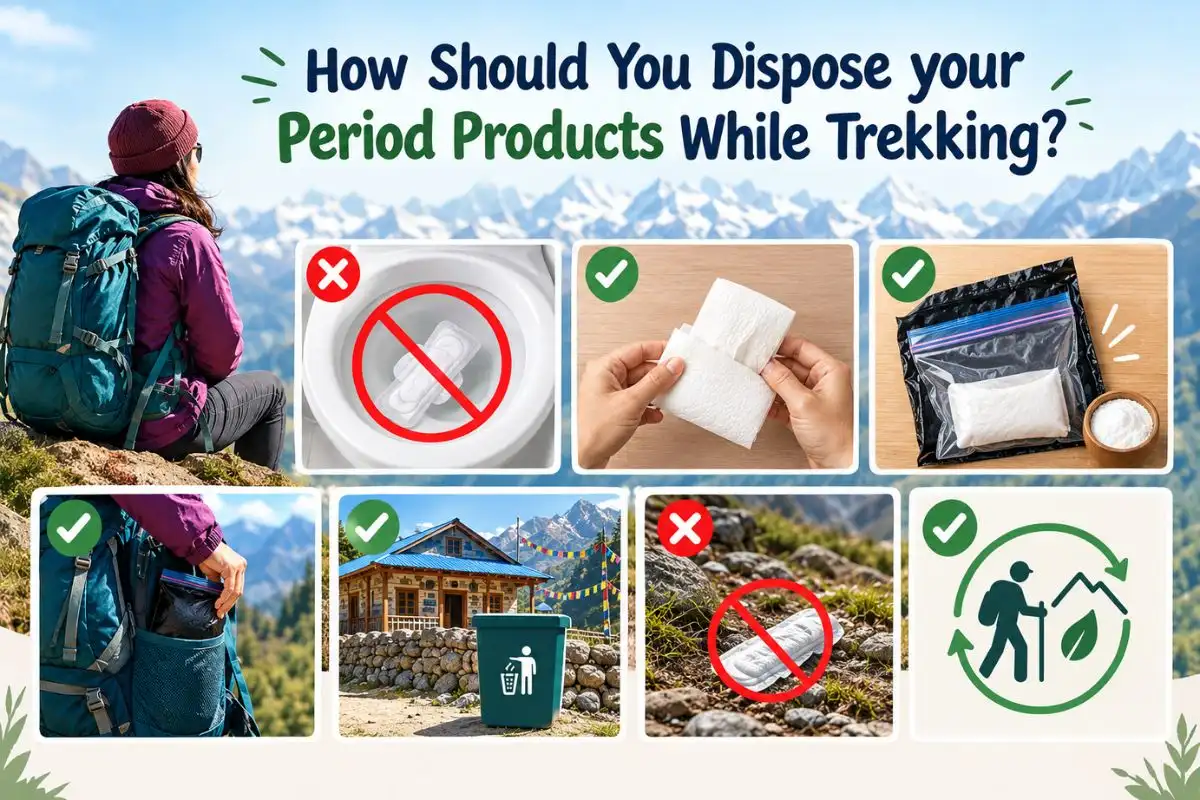
When suitable disposal facilities aren't available, used disposable menstrual products should be securely contained and carried until they can be disposed of according to local waste-management guidance.
In practice:
- Don't flush menstrual products unless the facility specifically says you can. Most mountain plumbing cannot handle them.
- Wrap used products in toilet paper or their original wrapper.
- Place them in a sealable, opaque bag when there's no suitable bin. Ziplock bags with a dark outer bag work well, and a little bicarbonate of soda helps with odor.
- Store the bag securely in an outside pocket of your daypack or duffel.
- Follow the waste instructions given by your teahouse or trekking team. Some lodges have systems in place; some don't.
- Never leave menstrual waste on the trail, buried, under a rock or behind a wall. It doesn't decompose at altitude, and it's a well-documented problem on popular routes.
This is part of the same Leave No Trace thinking that applies to wrappers, batteries and everything else you carry in. What you bring up, you bring down.
Can You Use a Menstrual Cup on a Himalayan Trek?
Yes, and many experienced trekkers prefer one. The practical considerations in Himalayan conditions are specific:
- Hand hygiene comes first. Clean hands with soap and water where possible and hand sanitizer where not, before inserting or removing.
- Rinsing needs clean water. Use boiled, filtered or treated water rather than untreated tap or stream water.
- Privacy is limited. Emptying a cup in a cramped, dark squat toilet takes practice, so bring a headtorch and be comfortable doing it by feel.
- Empty it according to the manufacturer's instructions and plan those changes around morning and evening stops rather than mid-trail where possible.
- Sterilizing between cycles isn't practical on the trail. Boiling water in a teahouse pot isn't an option, so plan to sterilize it before you leave and after you return.
- Don't use one for the first time on a trek. Learn the technique at home over at least one or two full cycles first.
Does High Altitude Affect Your Period?
Menstrual cycles naturally vary from month to month, and travel, disrupted sleep, time-zone changes, sustained physical effort and stress can all influence cycle timing and symptoms for some women. Many trekkers notice their period arriving a few days off schedule.
It's worth being cautious about the explanation, though. Cycle changes during a trek can have many causes, and attributing every change to altitude specifically isn't supported. If you notice significant or persistent changes to your cycle, that's a conversation for your own doctor rather than a trail diagnosis.
To know more about this, read our blog on “Can high altitude affect your period?”
Period Symptoms vs Altitude Illness
| Often ordinary menstrual symptoms | Possible altitude-related warning signs |
| Cramping in the lower abdomen or back | Headache that doesn't ease with rest, fluids or acclimatisation |
| Mild headache you recognise from home | Nausea and vomiting that persists |
| Fatigue and low energy | Breathlessness at rest |
| Bloating and mood changes | Dizziness, confusion or loss of coordination |
| Tender breasts | Persistent dry cough or chest tightness |
Symptoms can overlap, which is exactly why the safe approach is to tell your guide how you're feeling rather than deciding for yourself which category it falls into. Follow the acclimatization plan and seek medical attention if you feel seriously unwell.
Managing Your Period at Night During a Trek
Teahouse nights are cold, shared, and dark, so a little preparation goes a long way.
- Change your product just before you get into your sleeping bag, not after you've settled in.
- Keep emergency supplies within the arm's reach of your bed, along with a headtorch.
- Have clean, dry underwear ready for the morning.
- Use extra protection overnight if you're worried about leaks. A sleeping bag liner is easier to wash than a sleeping bag.
- Keep used products sealed inside your room rather than leaving them out.
- Plan for the night-time bathroom trip. In many teahouses the toilet is down a cold corridor or outside, so keep a torch, shoes, and a jacket by the bed.
- Expect limited privacy in twin-share or dormitory rooms and use the bathroom rather than your bunk for changes.
What Is Menstruation Like in Nepal's Trekking Environment?
Nepal's trekking regions are rural mountain environments, and sanitation standards reflect that. Water is scarce and often carried by hand; waste has to be transported out by porter or animal; and infrastructure at 4,000 meters is necessarily simpler than in a Kathmandu hotel.
Menstrual products are widely available in Kathmandu and Pokhara. In trailhead towns and larger trekking villages, you may find basic pads, but selection is narrow, and prices rise with altitude. Tampons and cups are rarely stocked outside the cities. Bring what you need with you.
Attitudes to menstruation in Nepal vary considerably by community, region, family, and individual. Some households and areas observe traditional practices around menstruation; many do not, and practices are changing. Teahouses along popular trekking routes host international trekkers year-round and are generally accustomed to travelers' needs. If you're unsure about anything at a particular lodge, your guide can ask on your behalf, which is usually the simplest way to handle it respectfully.
How Can a Female Trekking Guide Help During Your Period?
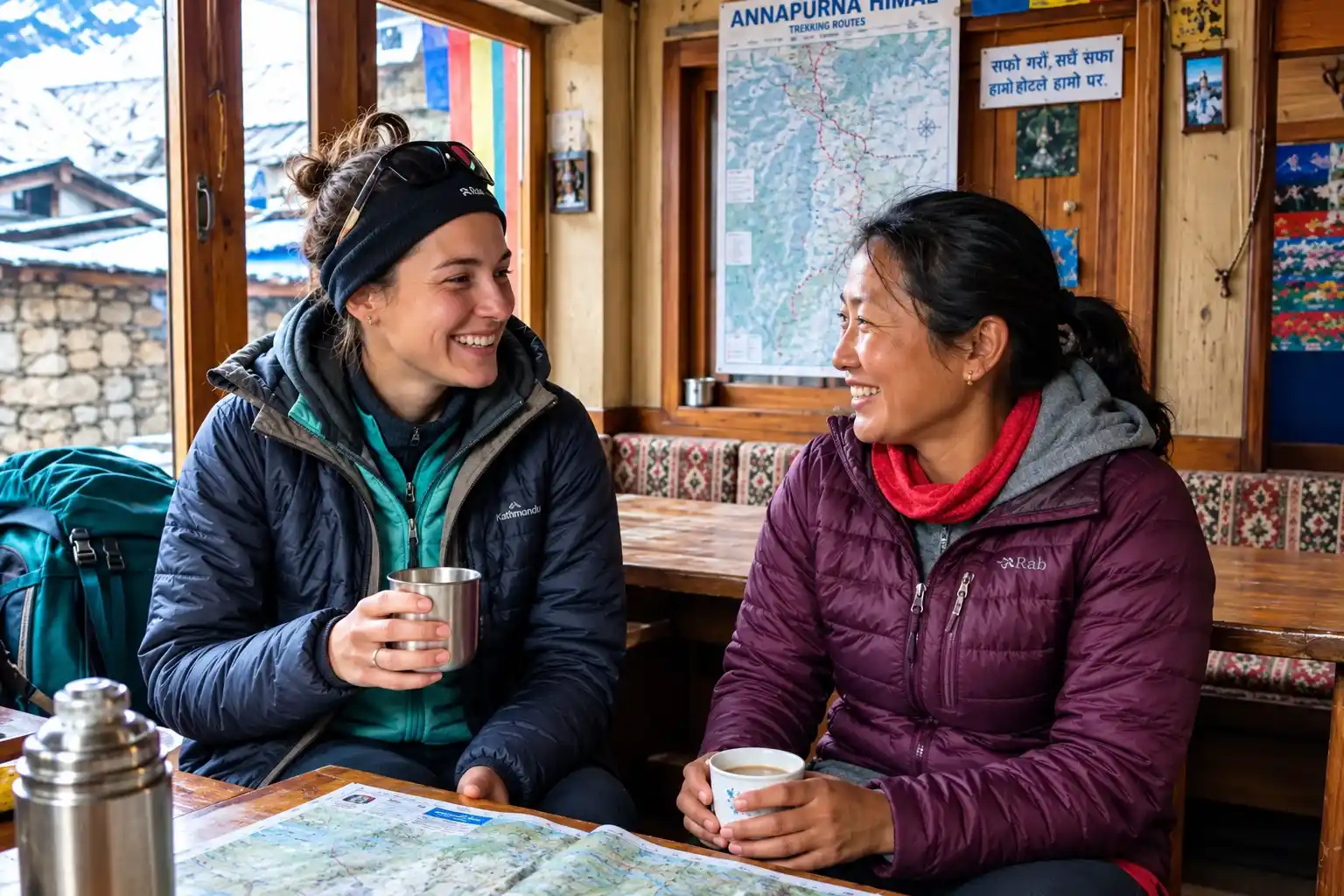
An experienced female trekking guide in Nepal removes a lot of small friction from these situations. Practical support can include:
- Identifying which teahouses ahead have better bathroom facilities
- Knowing the accommodation on a given route from experience rather than a booking page
- Communicating with teahouse staff about water, waste, or a change of room
- Offering reassurance from someone who has managed the same thing at altitude
- Helping you explain how you're feeling if you're unwell
- Understanding, without explanation, what a multi-day trek looks like from a woman's side of it
For many women, the value isn't any single task. It's not having to decide whether to raise the subject at all. This is one of the reasons a female trekking guide agency such as Women Adventures appeals to women planning their first Himalayan trek.
Are Women-Only Treks More Comfortable During Your Period?
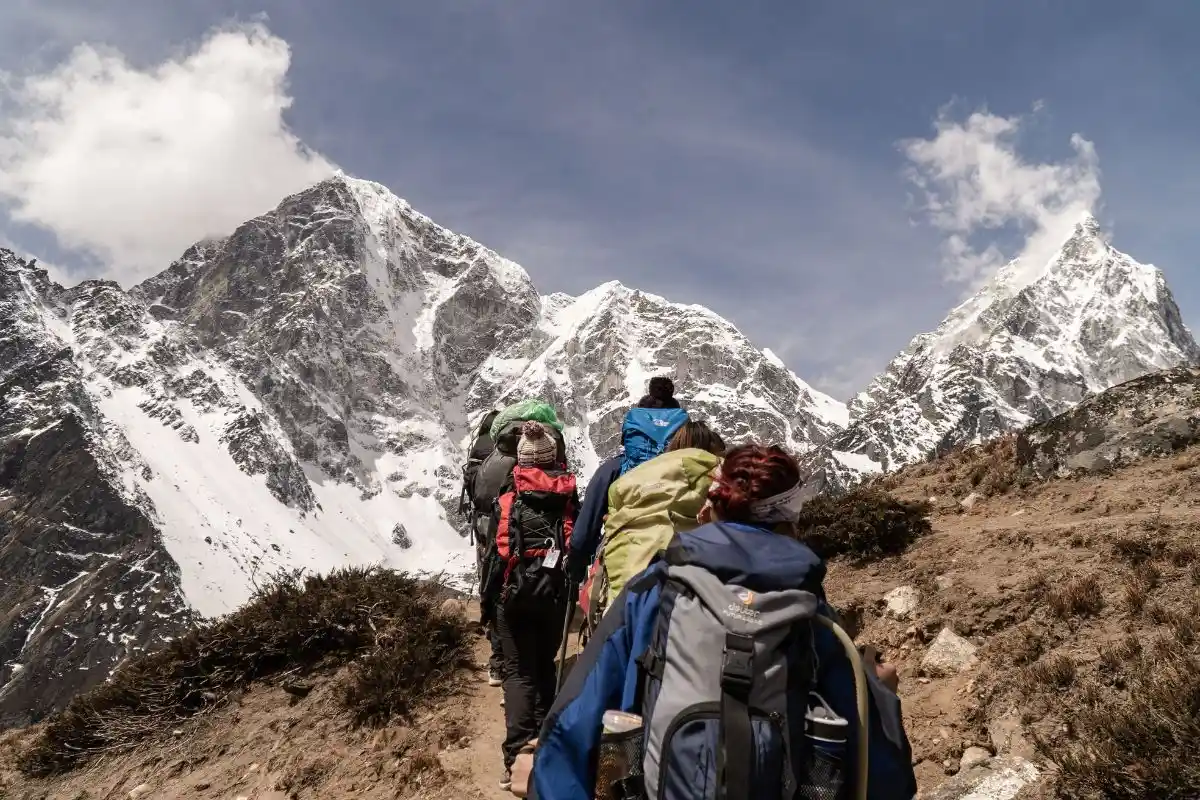
Women-only trekking isn't objectively better, and plenty of women trek happily in mixed groups. But some women prefer it, and the reasons are practical:
- Conversations about periods, hygiene, and bathroom stops are easier to have
- Other group members are likely to understand from experience
- Discussing personal concerns feels less exposed
- Female trekking guides lead the group
- The group dynamic tends to be supportive rather than competitive
- Others may share the same concerns you have
If that environment sounds like it would make your trek more comfortable, women only treks are worth considering alongside standard group departures.
Practical Period Checklist for a Himalayan Trek
Before leaving
- ☐ Pack preferred menstrual products
- ☐ Pack extra supplies
- ☐ Pack extra underwear
- ☐ Prepare hygiene kit
- ☐ Prepare waste bags
- ☐ Keep emergency supplies in daypack
During the trek
- ☐ Keep supplies accessible
- ☐ Maintain hand hygiene
- ☐ Plan product changes around appropriate facilities
- ☐ Stay hydrated
- ☐ Eat regularly
- ☐ Take breaks when needed
- ☐ Keep used products securely contained
At the teahouse
- ☐ Identify bathroom facilities
- ☐ Know where waste should go
- ☐ Keep nighttime supplies accessible
- ☐ Prepare clean, dry underwear
At altitude
- ☐ Follow acclimatization guidance
- ☐ Don't dismiss unusual symptoms as “just your period”
- ☐ Tell your guide if you're feeling unwell
Final Thoughts: Your Period Doesn't Have to Stop Your Himalayan Adventure
Preparation matters more than avoiding trekking during your period. Women complete every major trek in Nepal while menstruating, and the ones who find it straightforward are the ones who planned for it rather than hoped to avoid it.
The essentials:
- Bring the menstrual products you already know and trust
- Pack more than you think you need, and keep some in your daypack
- Expect limited bathroom facilities and limited water
- Plan how you'll contain and carry out waste
- Listen to your body and adjust your pace
- Know the difference between menstrual symptoms and altitude-related illness
- Ask your trekking team for help when you need it
For women who prefer to trek with experienced female guides and a supportive women-only group, Contact Women Adventures as it offers Himalayan trekking experiences designed specifically for women.
Frequently Asked Questions About Trekking During Your Period
Can You Go Trekking During Your Period?
Yes. Many women complete Himalayan treks while menstruating. What matters is preparation: bringing your preferred products, extra supplies, hygiene items, and sealable waste bags. Menstruation itself is not a medical reason to cancel a trek, though your own comfort and symptoms are worth factoring into how you plan your days.
Is Trekking During Menstruation Safe?
For most women in good health, yes. Trekking while menstruating carries no special risk beyond the usual considerations of altitude and exertion. If you have a condition affecting your periods, very heavy bleeding, or severe symptoms, discuss your trek with your own doctor beforehand.
What Is the Best Menstrual Product for Trekking?
There isn't one universal answer. The best product is the one you already use confidently, adjusted for trekking constraints. Menstrual cups minimize waste but need clean water and privacy. Pads and tampons are familiar but must be carried out. Many women combine products for day and night.
Can You Use a Menstrual Cup While Trekking?
Yes, if you're already comfortable using one. Cups suit long walking days and produce almost no waste. You'll need clean hands, treated water for rinsing, and a head torch for dark toilets. Don't try a cup for the first time on a trek; practice at home over a full cycle first.
What Should I Pack for My Period on a Himalayan Trek?
Your preferred menstrual products plus extras, two to three spare pairs of underwear, toilet paper, hand sanitizer, personal wipes, sealable opaque waste bags, a small hygiene pouch, and any medication you normally use. Keep at least a day's supply in your daypack rather than your duffel.
How Do You Manage Period Hygiene While Trekking?
Focus on hand hygiene and frequent product changes. Wash with soap and water when it's available, use hand sanitizer when it isn't, and carry personal wipes for cleaning up. Keep clean and used underwear in separate bags and accept that you won't be as clean as at home.
What Are Toilets Like on a Himalayan Trek?
They vary widely. Lower villages often have Western-style toilets and better plumbing; higher teahouses typically have squat toilets, no running water, and a bucket for flushing. Toilet paper is rarely supplied. Always carry your own tissues and hand sanitizer and ask your guide which stops ahead have better facilities.
How Do You Dispose of Period Products While Trekking?
Wrap used products and seal them in an opaque bag, then carry them until you reach a place with proper disposal. Don't flush menstrual products unless the facility specifically permits it and never leave or bury them on the trail. Follow the waste guidance given by your teahouse or trekking team.
Can Altitude Affect Your Period?
Cycles naturally vary, and travel, disrupted sleep, physical exertion, and stress can all shift timing or symptoms for some women. It's best not to assume any change is caused by altitude specifically. Plan for your period arriving off schedule and raise persistent changes with your own doctor.
What If My Period Comes Unexpectedly During a Trek?
Keep two or three products in your daypack at all times, even when your period isn't due. If you're caught short, tell your guide who can help you find suitable facilities and supplies. Other women in the group will often have spares. It's a routine situation on the trek.
Can I Join a Women-Only Trek While on My Period?
Yes. Menstruating doesn't affect your eligibility for any trek. Some women specifically prefer women-only departures during their period because conversations about hygiene, bathroom stops, and how they're feeling are easier to have with female guides and fellow trekkers.
Can a Female Trekking Guide Help If I Have Period-Related Concerns?
Yes. A female guide can identify teahouses with better facilities, communicate with lodge staff on your behalf, advise on waste disposal along the route, and help you explain how you're feeling. For many women, the main benefit is simply not having to work out how to raise the subject.