
Tabel Of Contents
- Can Women Stay Clean During a Multi-Day Himalayan Trek?
- What Hygiene Challenges Do Women Face on a Himalayan Trek?
- How Should Women Maintain Personal Hygiene Every Day While Trekking?
- How Can Women Maintain Intimate Hygiene While Trekking?
- What Should Women Pack in a Trekking Hygiene Kit?
- How Do Women Manage Toilet Hygiene While Trekking in Nepal?
- How Do Women Manage Menstrual Hygiene on a Himalayan Trek?
- How Can Women Shower While Trekking in Nepal?
- How Can Women Wash Their Hair on a Trek?
- How Should Women Manage Underwear and Bras on a Trek?
- How Can Women Keep Trekking Clothes Clean?
- How Can Women Maintain Foot Hygiene During a Multi-Day Trek?
- How Should Women Handle Hygiene Waste on a Trek?
- What If You Feel Uncomfortable Discussing Hygiene With Your Trekking Guide?
- Why Do Some Women Prefer Women-Only Treks in Nepal?
- Women's Multi-Day Trek Hygiene Routine: Quick Guide
- Women's Himalayan Trek Hygiene Checklist
- Final Thoughts: Hygiene for Women on a Himalayan Trek
- FAQs About Women's Hygiene While Trekking
Women can stay clean, fresh, and comfortable on a multi-day trek by adapting their usual routine to whatever facilities the trail offers. Good trekking hygiene for women comes down to a few priorities: clean hands, clean and dry underwear, gentle intimate care, a plan for your period, and a way to manage privacy when bathrooms and rooms are shared.
What makes women's trekking hygiene different from a generic routine? You may be dealing with menstruation, intimate hygiene without running water, sweaty sports bras, toilet privacy in teahouses, long hair that only gets washed every few days, and hygiene waste you need to carry out yourself. Many women also simply feel more at ease raising these topics with another woman.
In Nepal, facilities vary a lot by route, altitude, and lodge. Some teahouses on the Everest and Annapurna trails have attached bathrooms and hot showers. Higher up, or on quieter routes, you may find a shared squat toilet and a bucket of warm water. The good news: you don't need your exact home routine. You need a practical one that keeps you clean, dry and comfortable in the conditions you actually meet.
Can Women Stay Clean During a Multi-Day Himalayan Trek?
Yes. Women can maintain good hygiene on a multi-day Himalayan trek, even when showers, running water and privacy are limited. The key is to adjust your routine to the available facilities and pay particular attention to intimate, menstrual, toilet, and underwear hygiene.
Most female trekkers find that a few small habits matter far more than daily showers. Washing key areas each evening, changing into dry underwear, and keeping a small hygiene pouch within reach will keep you comfortable for days at a time.
What Hygiene Challenges Do Women Face on a Himalayan Trek?
Knowing what to expect before you arrive is half the battle. These are the situations women most often encounter on the trail.
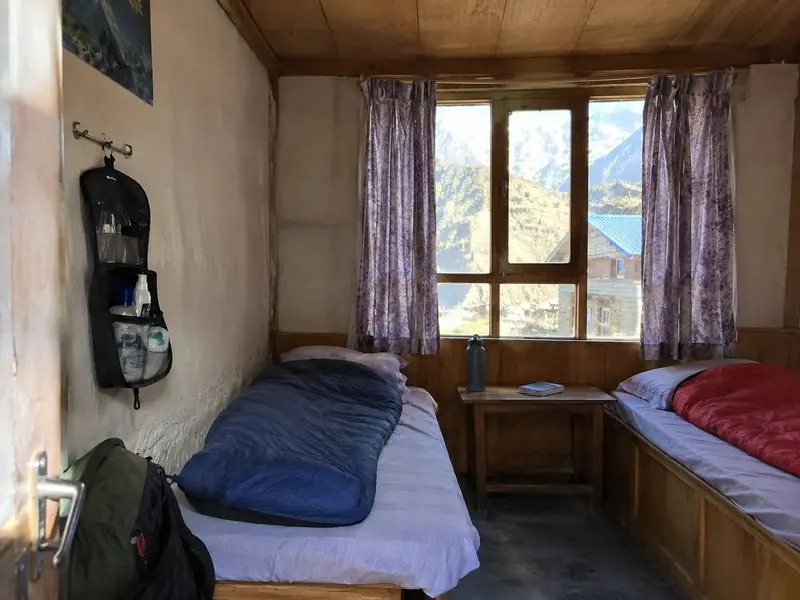 Simple twin room in a Nepal teahouse with sleeping bags on the beds
Limited Privacy in Teahouses
Teahouse rooms are usually simple twin rooms with thin walls, and bathrooms are often shared along a corridor. If you are trekking with a friend or in a group, you may share a room too. That makes changing clothes, drying underwear, and handling menstrual products a little less private than at home.
A few simple habits help: change inside your sleeping bag or with your back to the door, keep a dedicated pouch for personal items so nothing ends up scattered across the bed, and dry underwear discreetly inside the room rather than on a communal line.
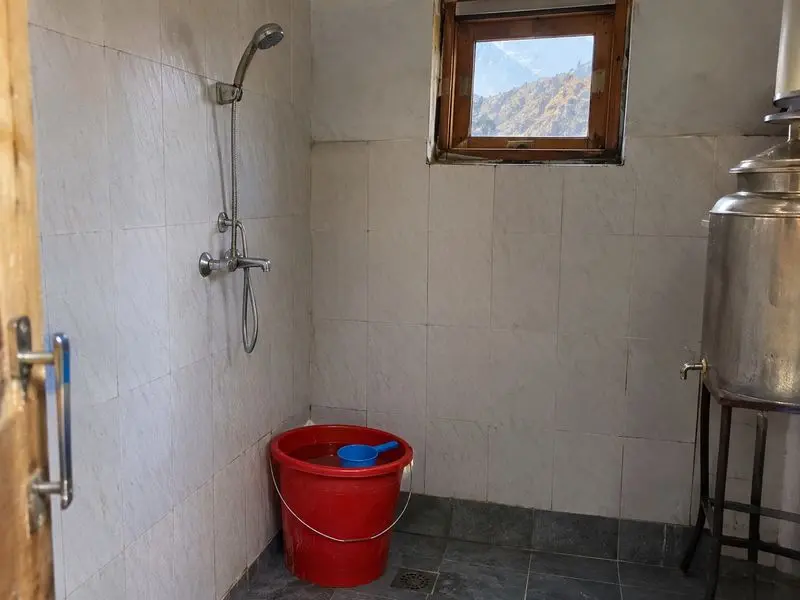 Bucket of warm water in a basic teahouse washroom in Nepal
Limited Water and Hot Showers
Lower on most routes, hot showers are common, sometimes solar or gas heated, and sometimes for a small extra fee. As you climb, you may only get a bucket of warm water or no shower at all once temperatures drop. Water can freeze overnight at higher camps, and washing in a cold, draughty bathroom is rarely appealing.
This is why a wash without a showering routine is so useful. It keeps you clean on the days when a full shower isn't practical or safe in the cold.
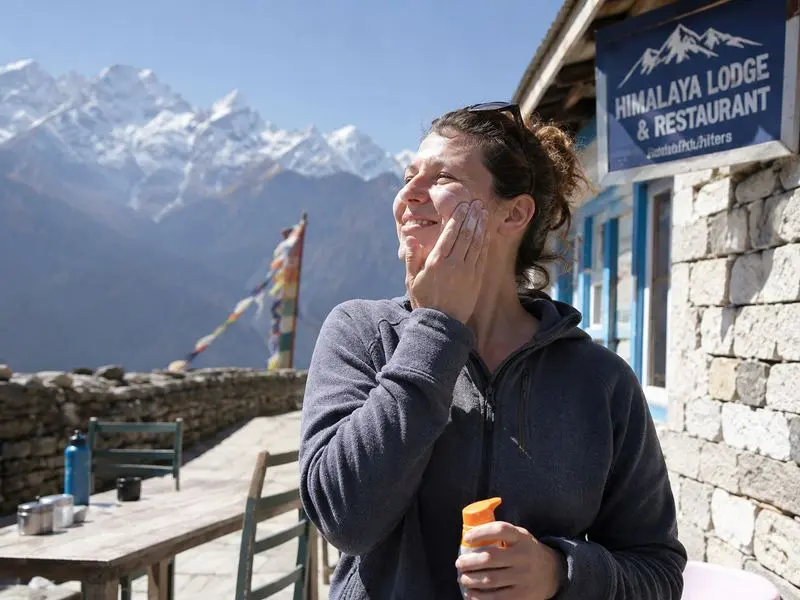 A female trekker applying sunscreen outside a lodge in morning light
Managing Sweat and Moisture
You will sweat on the climbs and cool down quickly at rest stops. Moisture that stays trapped against your skin is what causes most hygiene discomfort. Pay attention to:
- Underarms and the under-breast area
- The groin and external genital area
- Feet, which spend all day in socks and boots
- Damp underwear and sports bras after a long ascent
Moisture-wicking, quick-drying fabrics make a real difference here. Cotton holds sweat; merino and synthetic fabrics move it away from the skin and dry far faster.
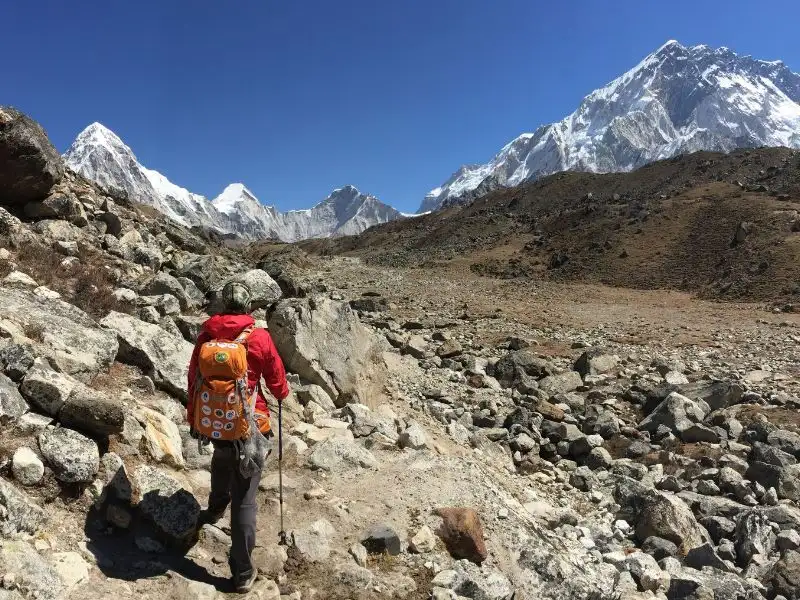 Woman trekking a long, remote stretch of trail between in Nepal
Managing Period on Long Trail Days
Many trekking days last five to seven hours, often with long stretches between villages and few toilets in between. That makes product change timing trickier than at home. You may need to change at a basic teahouse toilet during a tea stop, or somewhere discreet off the trail, with only hand sanitizer and the water you're carrying.
Keep products, spare underwear, and a waste bag in your daypack, and know roughly where the next lodge stop is.
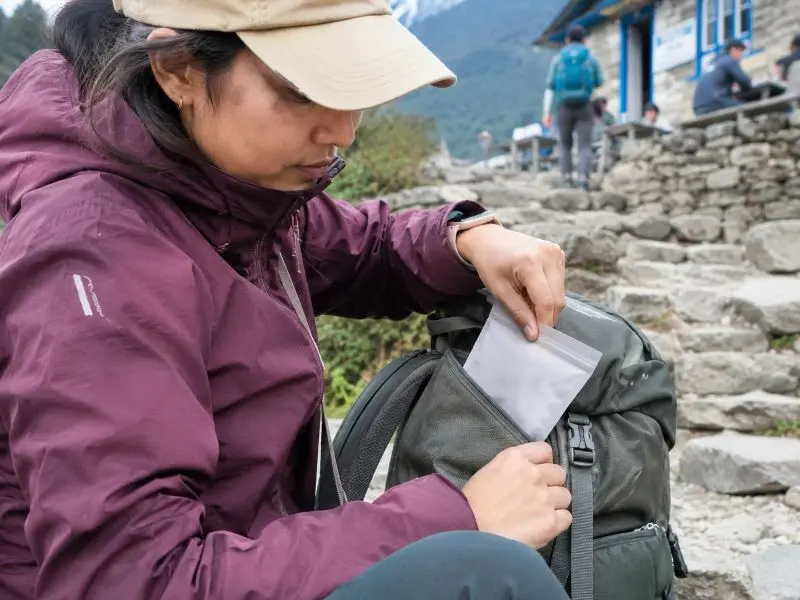 Women Trekker packing a sealed waste bag into her daypack to carry out on a Himalayan trek
Carrying Out Menstrual Products and Hygiene Waste
Mountain villages in Nepal have limited waste collection, and many teahouse bathrooms have only a small open bin, or none at all. Used pads, tampons, wipes, and toilet paper can't be flushed or left on the trail. On many days you'll need to wrap them and carry them in your pack until you reach a suitable bin, sometimes for several days.
For many women this is the least familiar part of trekking hygiene. It raises practical questions about privacy, smell, and space in your pack. It is easy to manage with a few sealable, opaque bags kept in your daypack.
How Should Women Maintain Personal Hygiene Every Day While Trekking?
A simple three-part routine (morning, on the trail, and evening) covers almost everything. It takes ten to fifteen minutes a day and makes the biggest difference to how you feel by day four or five.
Morning Hygiene Routine
- Brush your teeth and wash your face
- Clean your hands with water or sanitizer
- Put on fresh, dry underwear
- Change into a clean or fully dry bra when practical
- Dress in dry trekking layers
- Apply sunscreen and lip balm, even on cloudy days
- Tie or braid your hair to keep it off your face and out of the dust
- Check your feet for hot spots or irritation before lacing up
Hygiene During the Trekking Day
- Clean your hands before every meal and snack
- Unzip a layer before you overheat, so you sweat less
- Change damp socks at lunch if your feet feel wet
- Change underwear midday if it gets uncomfortably damp, especially during your period
- Use tissues or a small wipe at toilet stops
- Keep your hygiene pouch near the top of your daypack
Evening Hygiene Routine
When you reach the teahouse, wash before you get cold. Prioritize your hands, face, underarms, the external genital area and your feet. Then change into dry clothes and dedicated sleepwear, hang your trekking clothes to air out, and restock your daypack pouch for the next morning.
Keeping one set of clothes only for sleeping is one of the best hygiene tips for female trekkers. Clean, dry sleepwear means you go to bed fresh, however dusty the trail was.
How Can Women Maintain Intimate Hygiene While Trekking?
Intimate hygiene while trekking is simpler than many women expect. The goal is to keep the external genital area (the vulva) clean and dry, not to "deep clean" it.
- Rinse the external area once a day with clean, warm water when available
- Use plain water or a mild, unscented soap only on the outside if you use soap at all
- Wipe front to back after using the toilet
- Change underwear daily, and more often if it is damp
- Choose breathable, moisture-wicking underwear
- Wash or sanitize your hands before and after using the toilet or changing a menstrual product
- Keep intimate hygiene items in their own pouch, separate from food and other gear
If clean water is short, a fragrance-free wipe for the external area is a reasonable stopgap, but don't rely on wipes for days on end.
What Should Women Avoid for Intimate Hygiene on a Trek?
- Avoid vaginal douching and any internal cleansing; health bodies such as the US Office on Women's Health advice against it, as it can upset the natural balance and raise the risk of infection
- Avoid strongly fragranced soaps, washes, and wipes if they cause irritation
- Never use untreated stream or tap water of unknown quality for intimate washing
- Don't sit in damp underwear or wet clothing for long periods
If you notice unusual itching, discharge, burning, or odor on the trek, mention it to your female guide and seek medical advice. If you are prone to thrush or urinary tract infections, talk to your doctor before you travel about what to carry.
What Should Women Pack in a Trekking Hygiene Kit?
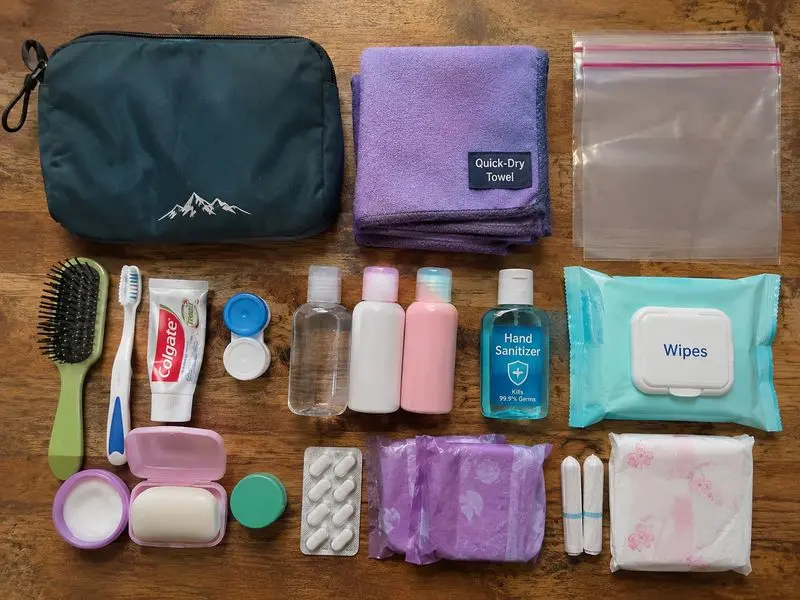 Women’s trekking hygiene kit with quick-dry towel, sanitizer, wipes and period products
A good women's trekking packing list keeps hygiene products for trekking compact, light, and organized, so you can find what you need quickly in a dim teahouse room.
Essential Women's Hygiene Items
- Toothbrush and toothpaste
- Hand sanitizer
- Toilet paper and pocket tissues
- Fragrance-free personal wipes
- Quick-dry towel
- Mild, unscented biodegradable soap
- Moisture-wicking underwear, plus extra pairs
- Moisture-wicking socks
- Two or three trekking-friendly sports bras
- Your preferred menstrual products
- Sealable, opaque waste bags
- Personal medication
- Sunscreen and lip balm
- A small hygiene pouch to hold it all
What Should Women Keep in Their Daypack?
Your main bag is often carried by a porter and may not be reachable until evening. Keep a small pouch of trekking essentials for women in your daypack:
- Tissues and a mini hand sanitizer
- A few small wipes
- Emergency menstrual products
- One spare pair of underwear
- A small waste bag
- Personal medication
How Do Women Manage Toilet Hygiene While Trekking in Nepal?
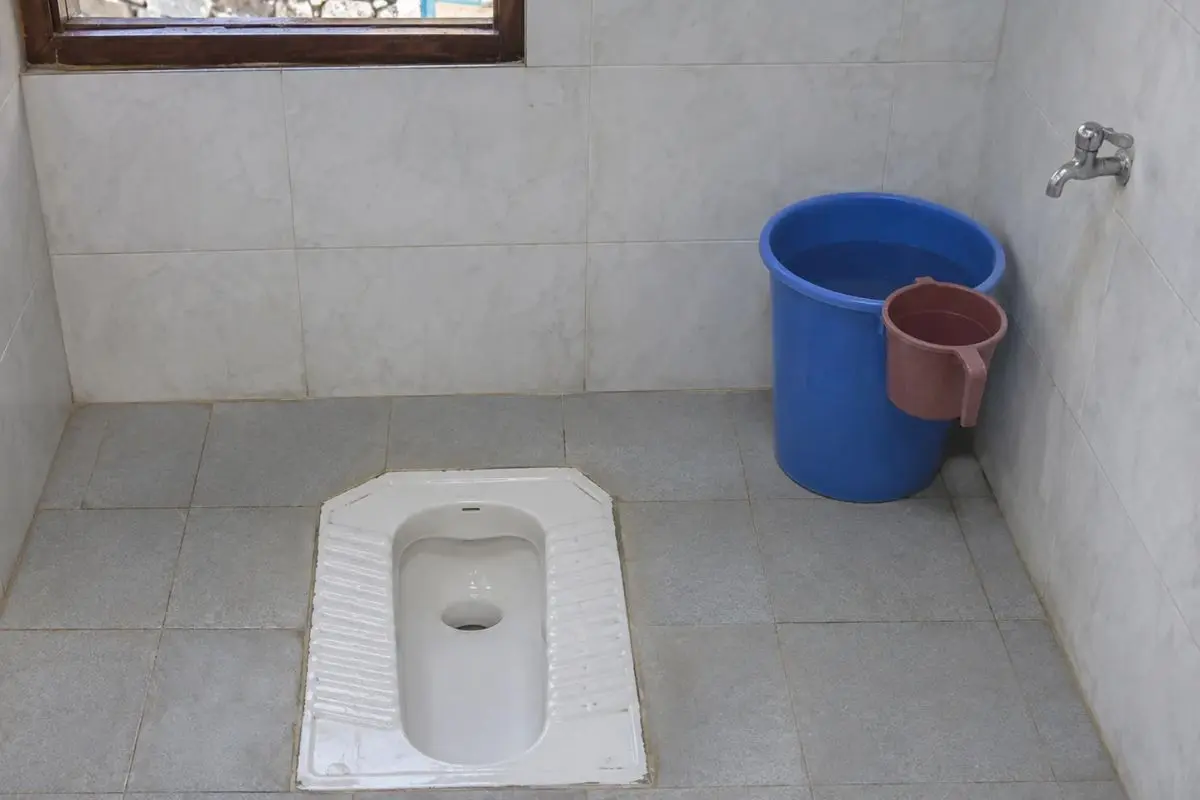
For many first-time female trekkers, the bathroom question is the biggest worry. In practice, a little preparation removes most of the stress.
Toilet facilities on Nepal treks range from Western flush toilets with attached bathrooms to basic squat toilets in an outside hut. On popular routes such as Everest Base Camp, Annapurna Base Camp and the Annapurna Circuit, lower villages usually have better facilities; quieter routes such as Manaslu or higher stops on any trail tend to be more basic. Teahouse bathrooms in Nepal are often shared, may not supply toilet paper, and usually have a bucket and scoop for flushing.
What Should Women Carry for Trekking Toilet Breaks?
- Toilet paper or tissues
- Hand sanitizer
- Personal wipes
- A small waste bag for used paper and products
- Menstrual products if your period is due
Between villages, you may need to go outdoors. Ask your guide for a discreet spot, move well away from water sources, and pack out all paper.
How Can Women Maintain Hygiene After Using a Trekking Toilet?
- Clean your hands every time with soap and water or sanitizer
- Use toilet paper or water as you prefer, wiping front to back
- Put used paper in the bin provided, not down the toilet, unless the lodge says otherwise
- Keep clean items and used items in separate bags
- Follow each lodge's instructions for flushing and waste
How Do Women Manage Menstrual Hygiene on a Himalayan Trek?
Menstrual hygiene while trekking is very manageable with the right preparation. This section focuses on the hygiene side; for the full picture, read our guide to Trekking During Your Period: How Women Manage Menstruation on a Himalayan Trek.
- Bring your preferred menstrual products from home, as choices in mountain villages are limited
- Pack more than you think you need, since altitude and travel can shift your cycle
- Keep products dry in a Ziploc bag
- Clean your hands before and after every change
- Carry opaque disposal bags for used products
- Check the bathroom setup when you arrive at each teahouse
- Plan changes around rest stops and lodges on long trail days
If you use a menstrual cup, you'll need clean water to rinse it and a way to boil or sterilize it between cycles; ask the teahouse for boiled water.
Should You Pack Extra Underwear for Your Period?
Yes. Pack at least two or three extra pairs of quick-drying underwear for your period. They give you a backup for leaks and let you change midday, and that means you're never forced to wear damp underwear while you wait for a pair to dry.
How Can Women Shower While Trekking in Nepal?
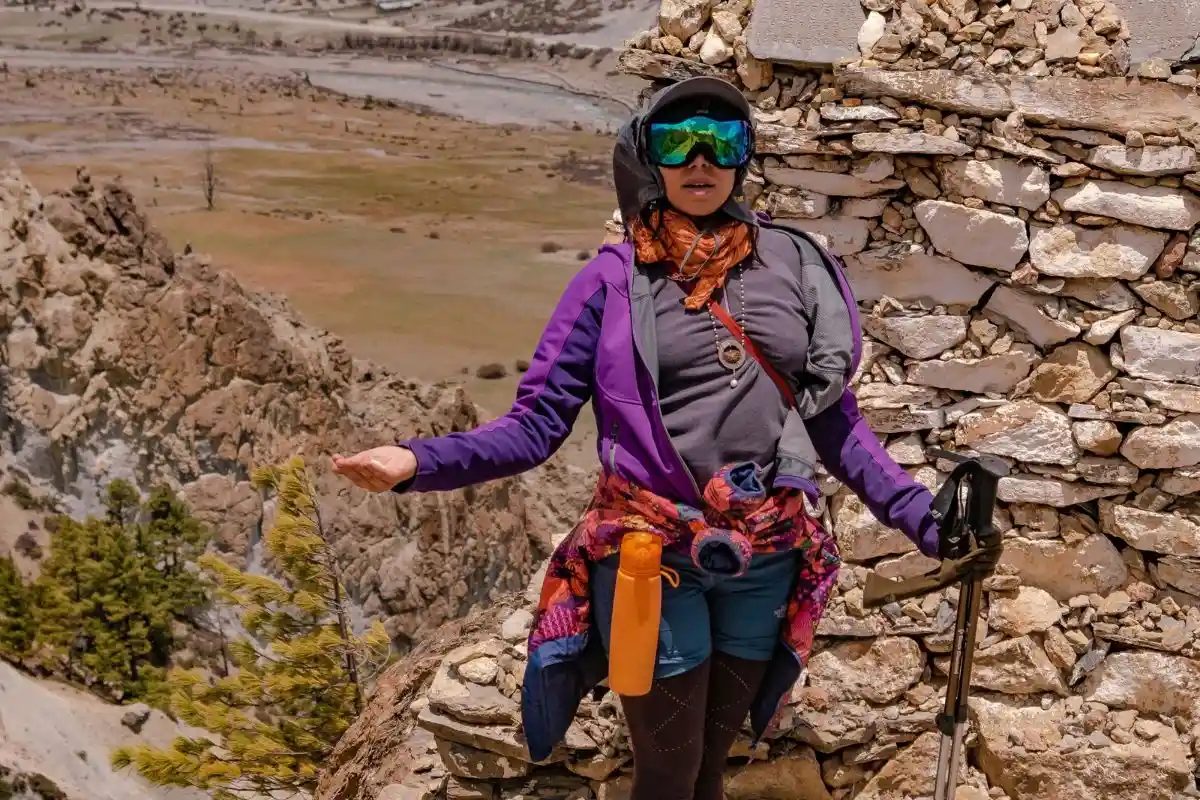
Showering while trekking in Nepal depends on where you are. At lower elevations, many teahouses offer hot showers, often for a small extra charge. Further up, you may get a bucket shower with warm water, a cold shower, or nothing at all. Hot water can be limited, so it pays to shower early in the afternoon, before other trekkers arrive and before the temperature drops.
Shower rooms are usually shared and sometimes outside the main building. Bring flip-flops, keep your clothes and pouch in a dry bag off the wet floor, and check the door lock before you start.
How Often Should Women Shower on a Multi-Day Trek?
There is no fixed number. It depends on how much you sweat, the weather, the facilities, water availability, and your own preference. At high altitude, many women skip full showers for several days because the cold makes it unpleasant and a chill is hard to shake. The goal isn't to shower every day; it's to stay clean, dry, and comfortable.
What Should Women Do When There Is No Shower?
If there is no shower, ask the teahouse for a bowl of warm water and follow this order:
- Wash your hands
- Wash your face
- Clean your underarms
- Clean the external genital area with clean water
- Change into fresh underwear
- Change damp socks
- Wash and thoroughly dry your feet
- Change into clean sleepwear
It takes about ten minutes and leaves you feeling far fresher than you'd expect.
How Can Women Wash Their Hair on a Trek?
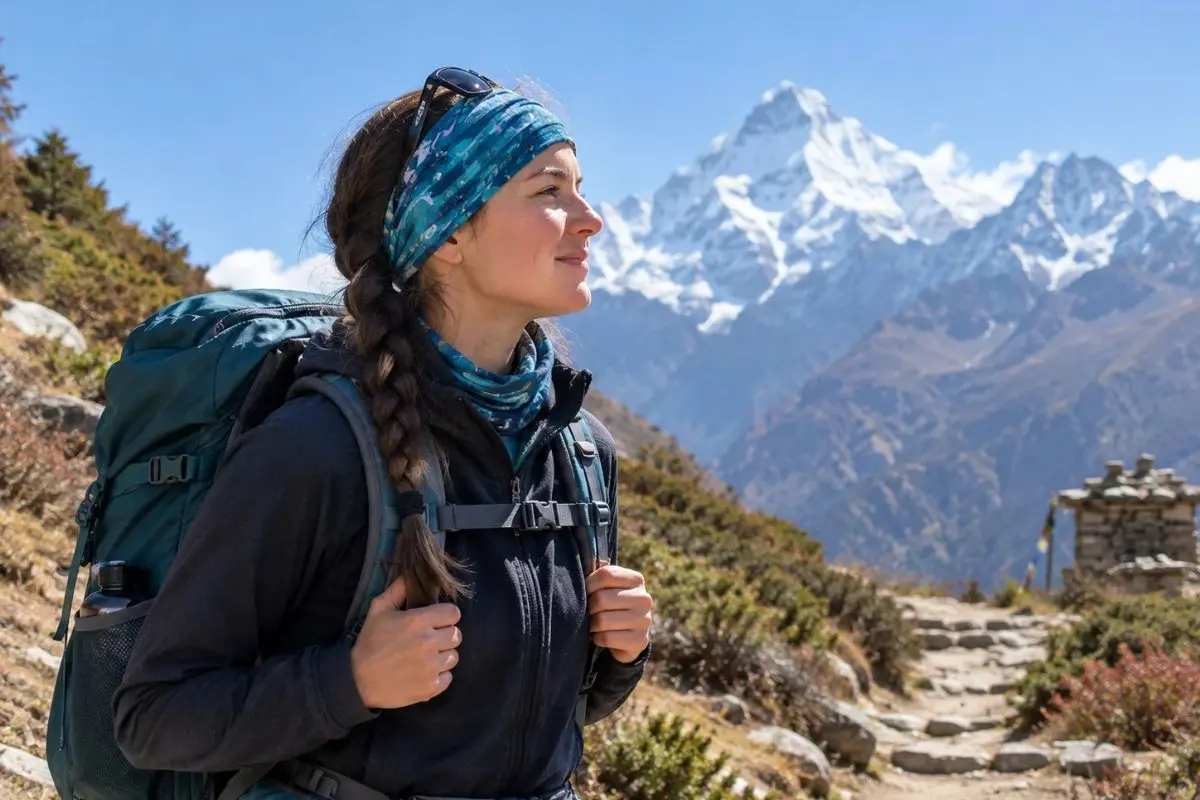
Wash your hair when a hot shower is available at lower elevations or with a bucket of warm water and a cup. In the cold, wash early in the day so it has time to dry, and never go to bed with wet hair at altitude. A small bottle of dry shampoo stretches the days between washes. On dusty sections, a buff or cap protects your hair from dust and sun, and there's no need to wash more often than you would at home.
How Can Women Keep Long Hair Manageable While Trekking?
- Braid it, or wear a low ponytail that sits comfortably under a hat
- Pack several spare hair ties
- Use a headband or buff to keep hair off your face
- Cover your hair on dusty, windy days
- Carry a small comb to deal with tangles
How Should Women Manage Underwear and Bras on a Trek?
Underwear and bras sit closest to the skin, so they matter most for women's hygiene on a trek.
How Many Pairs of Underwear Should You Pack?
Most women pack enough moisture-wicking, quick-drying pairs to change daily, with a few extra, or fewer pairs and a plan to wash them along the way. Merino and synthetic fabrics dry overnight far more reliably than cotton.
How Can You Dry Underwear in a Teahouse?
- Wash in the afternoon so it has time to dry before morning
- Use a designated drying area, or hang it discreetly in your room
- Keep clean and dirty underwear in separate bags
- Make sure it is fully dry before wearing it; never sleep in damp underwear
What to Do to Manage Sports Bras on a Trek?
Rotate two or three breathable sports bras, so a sweaty one always has time to dry. Take it off when you reach the lodge, air it out, and wear a softer bra or none to sleep.
How Can Women Keep Trekking Clothes Clean?
You won't have laundry facilities every day, so focus on the items that affect comfort most: underwear, sports bras, base layers, socks, trekking pants, and sleepwear.
Which Clothes Should Women Change More Frequently?
Change regularly: underwear, socks, damp base layers and very sweaty sports bras.
Usually fine to reuse when dry and reasonably clean: trekking pants and outer layers such as fleeces and jackets.
How Can Women Maintain Foot Hygiene During a Multi-Day Trek?
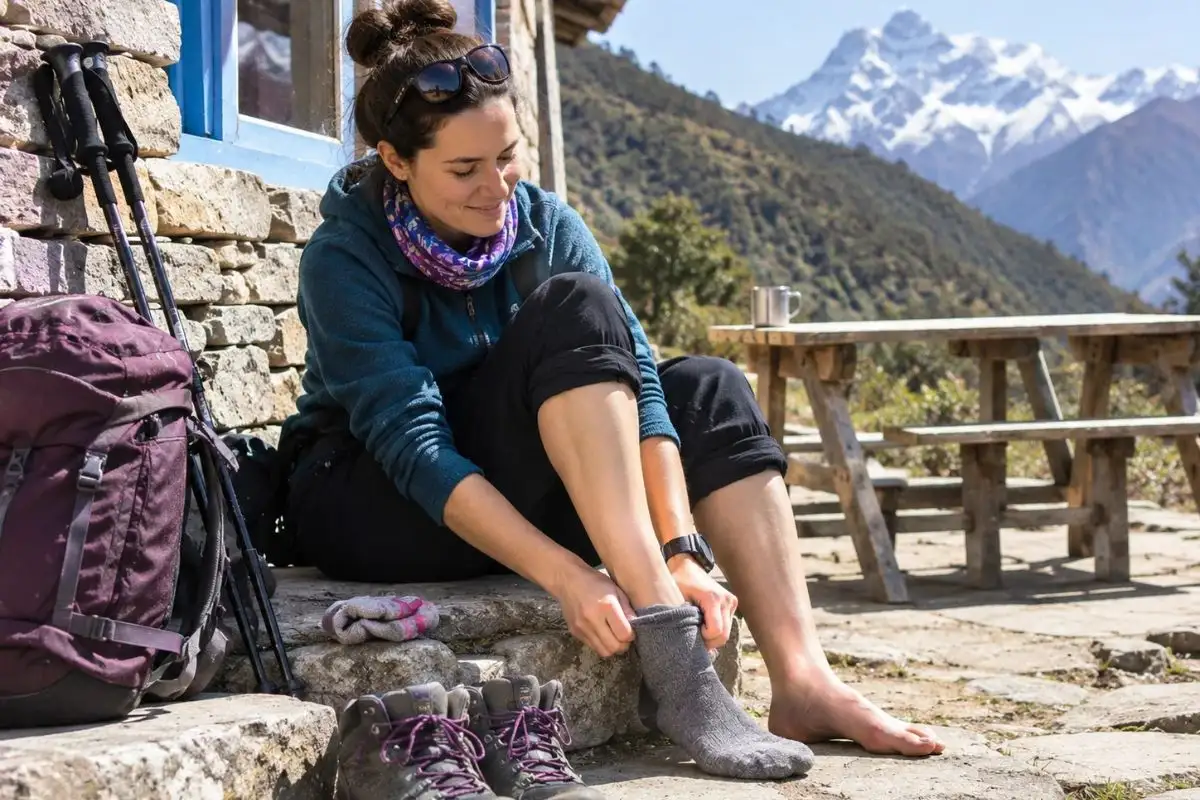
After many consecutive trekking days, your feet do most of the work. Keep them dry, change socks as soon as they feel damp, and dry your feet thoroughly after washing, especially between the toes. Check for hot spots every evening and treat blisters early. Air your feet and boots out at the end of the trekking day, and wear well-fitting, broken-in trekking footwear.
How Should Women Handle Hygiene Waste on a Trek?
Hygiene waste includes used menstrual products, wipes, tissues, toilet paper, and product packaging. Mountain villages have limited waste systems, so:
- Carry waste out when no suitable bin is available
- Use sealable, opaque bags for discretion and smell
- Never leave waste beside the trail
- Don't bury wipes or menstrual products; they don't break down quickly in cold soil
- Don't assume "biodegradable" products can be left behind
- Follow the lodge's and your guide's disposal guidance
What If You Feel Uncomfortable Discussing Hygiene With Your Trekking Guide?
On the trail, you may need to talk about things you'd rarely mention to a stranger: a period starting early, needing a toilet stop between villages, finding a shower, buying menstrual products, an intimate hygiene concern, or simply feeling unwell.
Some women simply feel more comfortable raising these topics with another woman. A female trekking guide in Nepal understands these needs firsthand, which can make those conversations quicker and easier. That's not because a woman trekking guide is inherently better, but because comfort matters when you're asking personal questions far from home.
Why Do Some Women Prefer Women-Only Treks in Nepal?
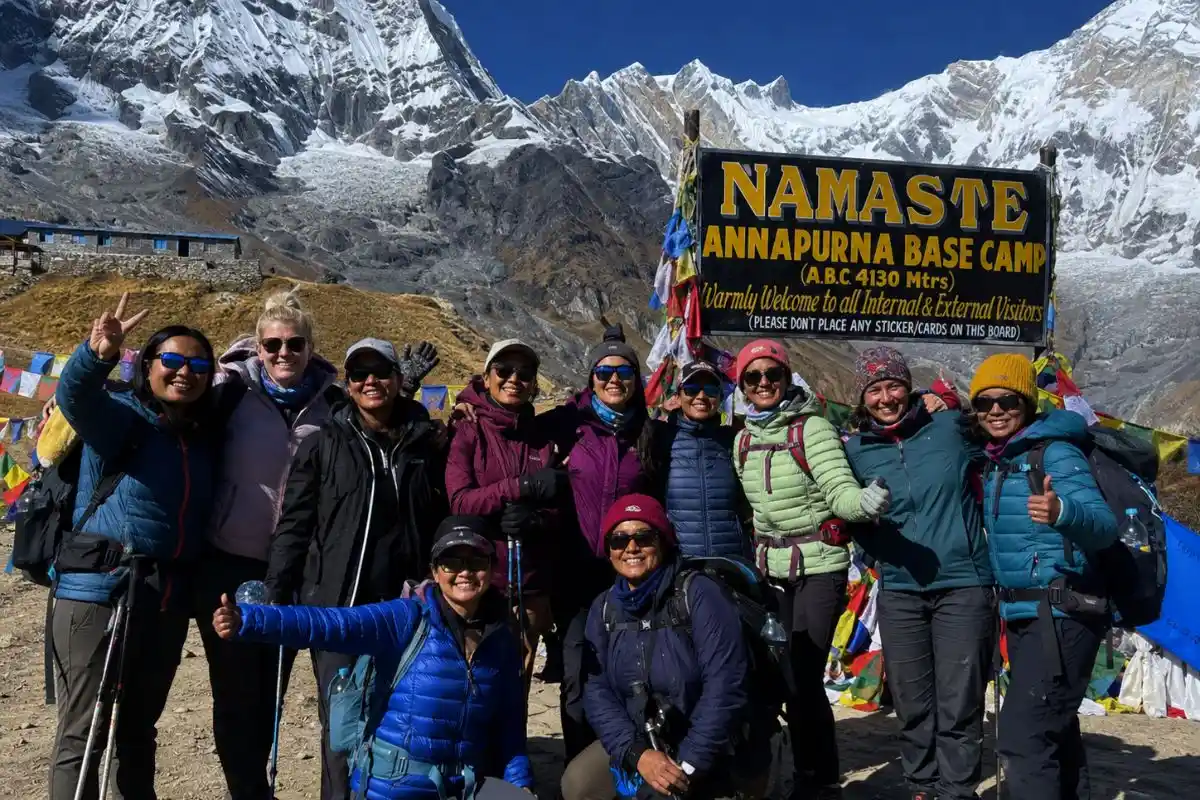
Women-only treks in Nepal appeal to many travelers for reasons of comfort and connection, rather than safety claims alone.
Women-Only Treks Can Offer
- Shared experiences with other women
- Easier conversations about periods, toilets, and hygiene
- Female trekking guides who understand women's needs
- Practical support from fellow female trekkers
- Social connection, whether it's a girls' trip or a solo traveler joining a group
- A more relaxed environment for many women
If that sounds like the trek you want, a women trekking agency that specializes in women's travel in Nepal can arrange female guides, small ladies' trip groups, and routes that suit your pace.
Women's Multi-Day Trek Hygiene Routine: Quick Guide
Time | Women's hygiene routine |
Morning | Brush teeth, wash face, fresh underwear, dry bra and clothes, sunscreen |
During trek | Hand hygiene, manage sweat, stay hydrated, change damp socks or underwear |
Toilet breaks | Carry toilet supplies, clean hands, pack out waste |
After trekking | Shower or wash, clean intimate external area, change clothes, wash feet |
Before bed | Brush teeth, dry sleepwear, prepare tomorrow's hygiene kit |
Women's Himalayan Trek Hygiene Checklist
Before the Trek
- Personal hygiene kit and small hygiene pouch
- Extra underwear, sports bras, and socks
- Menstrual products
- Tissues, wipes, and hand sanitizer
- Waste bags
- Quick-drying clothes
During the Trek
- Keep hands clean
- Keep underwear dry and change damp socks
- Manage sweat
- Keep menstrual supplies accessible
- Carry hygiene waste
At the Teahouse
- Check shower availability
- Wash when practical and change into dry clothes
- Dry wet clothing
- Prepare tomorrow's hygiene supplies
Final Thoughts: Hygiene for Women on a Himalayan Trek
Good trekking hygiene for women isn't about recreating your home bathroom on a mountain. It's about planning for limited privacy and facilities, prioritizing hands, feet and gentle intimate care, keeping underwear and clothes dry, preparing for your period, and carrying your waste responsibly. When you're unsure what the next lodge offers, ask your guide.
If you're planning your first Himalayan adventure and would prefer to travel with experienced female guides and other women, a women-focused trekking experience can make the journey feel more comfortable and connected. Get in touch with Women Adventures.
FAQs About Women's Hygiene While Trekking
How Do Women Maintain Hygiene While Trekking?
Women maintain hygiene while trekking by adapting their routine to trail facilities: washing hands often, cleaning the face, underarms, external genital area, and feet each evening, changing underwear daily, and keeping clothes dry. A small hygiene pouch and a plan for periods and waste make it easy.
How Do Women Stay Clean Without Showering on a Trek?
Use a bowl of warm water to wash your hands, face, underarms, external genital area, and feet, then change into fresh underwear, dry socks, and clean sleepwear. Done daily; this keeps you fresh for several days without a full shower.
How Do Women Manage Periods While Trekking in Nepal?
Bring your preferred products from home, pack extra, keep them dry, and clean your hands before and after each change. Carry opaque bags to pack out used products and keep spare underwear in your daypack. Plan changes around the teahouse and rest stops.
What Hygiene Products Should Women Pack for a Himalayan Trek?
Pack a toothbrush, toothpaste, hand sanitizer, toilet paper, unscented wipes, a quick-dry towel, mild soap, menstrual products, moisture-wicking underwear and socks, sports bras, waste bags, sunscreen, lip balm, and personal medication, all in a small pouch.
What Are Bathrooms Like on Nepal Treks?
Bathrooms on Nepal treks range from attached Western toilets with hot showers in lower villages to shared squat toilets and bucket water higher up. Toilet paper is rarely supplied, and used paper usually goes in a bin rather than the toilet.
How Do Women Manage Toilet Hygiene While Trekking?
Carry toilet paper, sanitizer, wipes, and a small waste bag. Wipe front to back, clean your hands every time, keep used items separate from clean ones, and follow each lodge's flushing and disposal instructions. Ask your guide for a discreet spot between villages.
How Often Can Women Shower While Trekking in Nepal?
It depends on the route and altitude. Lower villages often have hot showers, sometimes for a small fee, while higher stops may only offer bucket water or none. Many women shower every two or three days and wash key areas in between.
How Do Women Wash Their Hair While Trekking?
Wash your hair when hot showers are available or use a bucket of warm water. Wash early so it dries before evening and never sleep with wet hair at altitude. Braids, buns, and dry shampoo keep hair manageable between washes.
How Do Women Keep Underwear Clean While Trekking?
Pack quick-drying, moisture-wicking underwear; change daily or whenever it's damp; and wash pairs in the afternoon so they dry overnight. Store clean and worn underwear in separate bags.
How Do Women Dry Underwear and Bras on a Trek?
Wash them early in the afternoon, then hang them discreetly in your room or a designated drying area. Rotate two or three sports bras, and make sure every item is fully dry before you wear it.
How Do Women Manage Intimate Hygiene While Trekking?
Rinse the external genital area daily with clean water, using only mild unscented soap if any. Avoid douching or internal cleansing; wipe front to back, change underwear daily, and keep the area dry. Seek advice if you notice irritation or unusual symptoms.
What Should Women Do If There Is No Shower?
Ask for a bowl of warm water and wash your hands, face, underarms, external genital area, and feet. Then change into fresh underwear, dry socks, and clean sleepwear.
How Do Women Dispose of Menstrual and Hygiene Waste While Trekking?
Wrap used products, wipes, and paper in sealable, opaque bags and carry them until you reach a suitable bin, often back in a larger town. Never bury or leave hygiene waste on the trail, even if it's labelled biodegradable.
Are Women-Only Treks More Comfortable for Hygiene Concerns?
For many women, yes. Women-only treks make it easier to talk openly about periods, toilets, and hygiene with your guide and group, and fellow female trekkers often share practical tips. Comfort is personal, so choose the style that suits you.
Is a Female Trekking Guide Useful for Women Trekking in Nepal?
A female trekking guide can be especially helpful if you'd feel more at ease discussing periods, toilet needs, or intimate hygiene with another woman. She can advise on lodge facilities, discreet toilet stops, and where to find products along the trekking route.