
Tabel Of Contents
- Spring Season for Manaslu Circuit Trek: A Time of Scenic Splendor (March to May)
- Manaslu Circuit Trek in Monsoon: A Rugged Adventure (June to August)
- Trekking the Manaslu Circuit in Winter: A Daring Adventure (December to February)
- Manaslu Circuit Trek in Autumn: A Prime Trekking Season (September to November)
- Conclusion
The Manaslu Circuit Trek is a journey to one of the most untouched and beautiful trekking destinations in Nepal, which is located in the Gorkha district of Nepal. This route surrounds the eight highest mountains globally, unique, and is nicely free from the regular trekking zone.
The trek covers about 177 kilometers of the area and offers such views as meadows, waterfalls, and many ascensions in high altitude. On the route via Budhi Gandaki River through the ancient salt trading center, trekkers get to see some of the giant peaks, such as Mt. Manaslu, Ganesh Himal and Annapurna II peak.
Besides, there are attractive sights on the trek as well as an opportunity to enjoy the local culture and flora and fauna. It also has many other species of wildlife, such as 33 species of mammals, 110 species of birds, and the flora and the forests. The climatic variation of this area extends from the tropical to the arctic, and there are six different zones that offer versatility in the trekking areas.
It is forbidden to trek alone; for this, there is a special restricted area permit that is needed for the Manaslu Circuit Trek. The trek starts at 900m in Machha Khola and goes up to 5,215m at Larkya La pass with pleasant, challenging, steep slopes and also the joyous, rewarding experience.
The timing of trekking also plays an important role when deciding on your trek, so the proper timing can improve the experience greatly. There is no restriction on the accessibility of the Manaslu Circuit, but within these seasons, each has its advantages along with its disadvantages. In this blog post, we will provide general descriptions of all four seasons so that you can choose what time you would like to go trekking and get the most out of the experience.
Whether you are looking for a remote spot of relaxation or a colorful bloom, we will assist you in maneuvering the seasons to offer the most suitable time for the Manaslu Circuit Trek.
Spring Season for Manaslu Circuit Trek: A Time of Scenic Splendor (March to May)

This trek falls under the months of March up to mid-May, and it’s regarded as one of the best times to do the Manaslu Circuit Trek because of the attractive climate and beautiful views. This is an active season with the best weather for trekking as well as blooming nature around the region.
- Weather and Temperature: It has a suitable environment for trekking through hills and mountains in the early months of the year during spring. The temperature on the lowland varies from 15 to 25 degrees Celsius with an average temperature of 20 degrees Celsius. Further up the temperatures fluctuate between 5°C (41°F) and 10°C (50°F) and may drop to 0°C (32°F) in areas that are about 2500 meters (8,202 feet) and above. People have to be ready for cold temperatures when they are in areas with higher elevations and must dress accordingly.
- Floral Beauty: There is also a variety of flowers throughout the Manaslu Circuit in spring. The trail is enhanced by the natural beauties endowed with the flamboyant Nepal’s national flower, Rhododendron flowers, which bloom in red, pink, and white colors along the lightly rocky terrains. The forests are filled with magnolia and alpine flowers, and the waterfalls are much more attractive. The stunning beauty of the surroundings gets amplified in this season as there is an explosion of blossoms, which makes it a perfect setting for photos and enhances the mysterious aura throughout the trek.
The warmer months of spring also present a higher likelihood of encountering wildlife in the Manaslu Circuit Trail, including the Himalayan marmots, the monkeys called the black langurs, and colorful birds. The beauty that comes with the availability of wildlife and flowers makes the adventure beautiful, hence making the experience more enjoyable.
- Clear Skies and Breathtaking Views: The beautiful blue of the skies during spring also offers the best vantage points to the snow-capped Himalayas. You will be blessed with beautiful views of Mt. Manaslu, Shringi Himal, Ganesh Himal, and Annapurna II. The snow-covered peaks of the mountains are accompanied by bright flowers to give the picturesque background to your safari.
- Cultural Richness: During the spring season, cultural festivities associated with Tibet are also depicted, with special focus on the Manaslu area. Lhosar is a great example of the festival, which you can attend during your trekking and get insight into the traditions and customs of the region.
- Considerations: Although spring can be regarded as the best time for trekking because of the favorable temperatures, it is a peak season. High traffic may result in trail overcrowding/overuse, congested teahouses and lodges, and depletion of resources. Some things that should be considered before going on the expedition are where to sleep, who to get as guides or porters, and how to get the necessary permits.
Therefore, the Manaslu circuit trek is perfect in the month of spring, as it has favorable climatic conditions, beautiful nature with flowers blooming and birds singing, and cultural sites around the circuit for tourists to explore. Nevertheless, the trekkers’ traffic is growing, and it is always a wonderful time to travel to the Himalayas during the season with crystal clear skies.
Manaslu Circuit Trek in Monsoon: A Rugged Adventure (June to August)
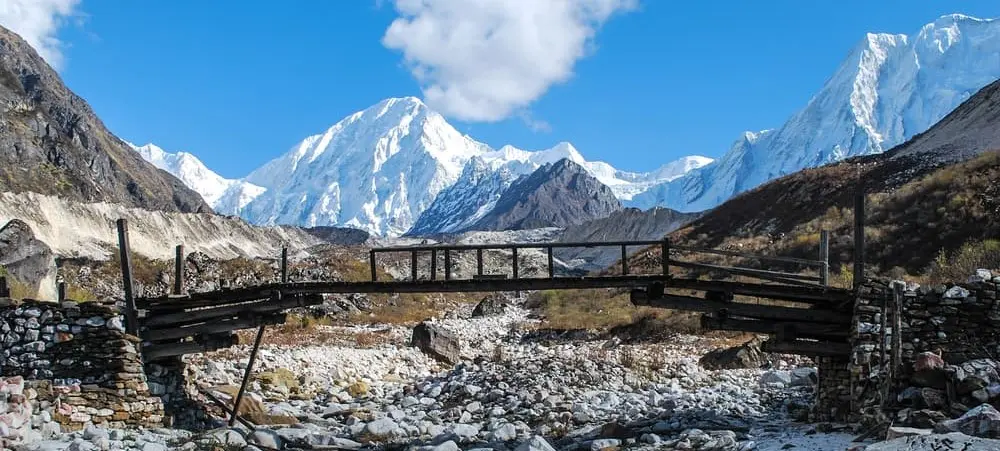
Trekking the Manaslu Circuit at the time when the monsoon rains occur, from June to August, was an interesting and quite different kind of hike, as you can observe significant changes to the landscape and weather conditions.
- Weather and Temperature: The climate of Nepal is characterized by monsoon—noticeable by heavy and frequent rainfall and large thermal swings. Dry conditions have, however, prevailed in all the altitudinal levels, with mild temperatures varying between 15°C (59°F) and 25°C (77°F) at lower altitudes. The temperatures here range between 5°C and 15°C, sometimes dropping to 5°C in higher altitude regions, particularly those above 2500 meters (8204 feet) above sea level. There is also an intervention of many clouds and rains throughout the year, which makes the temperatures fluctuate and visibility low at times.
- Landscape and Scenery: It is the monsoon rain that brings back the life and the beauty of the area and makes it green. Large areas of hill slopes are covered by trappings of beautiful flowers like rhododendrons, besides other wildflowers and foliage. On the other hand, waterfalls become more forceful as a result of increased rainfall. This beautiful scenery makes one have an interesting and beautiful view of the Manaslu region.
- Trekking Experience: Thus, for those interested in finding a different experience with fewer crowds, one can plan the trek during the monsoon season. A smaller number of people within a particular area gives you a close touch with nature—there is always a possibility to meet people and celebrate their rituals, for example, Janai Purnima.
- Challenges and Risks: The several challenging aspects of arriving during the monsoon season are the following. Some trails get affected by ice, which makes the chances of tripping and falling, especially on the slopes, high. Insects and leeches are more frequently encountered, and thus, one has to be more careful. Bad weather also inflicts the inconveniences of the trek and itinerary, including landslides, blocked paths, and rivers in space. Also, thick fog is common and may hinder views of the Himalayas, and less activity of the wildlife may make the trekking experience slightly less fulfilling.
- Accommodation and Services: Due to the monsoon season, many teahouses on the Manaslu Circuit have closed down, which leaves limited accommodation, thus leading to changed trekking experiences. Other inconveniences that are likely to occur include struggles in getting appropriate accommodations, hence a blow to your comfort.
Trekking the Manaslu Circuit during monsoon results in a less crowded and different experience as compared to other seasons, but it comes with many challenges such as unpredictable weather, challenging trails, and limited lodging options. If you want a safer and more entertaining climb, it is wiser to schedule your trip during spring or autumn.
Trekking the Manaslu Circuit in Winter: A Daring Adventure (December to February)
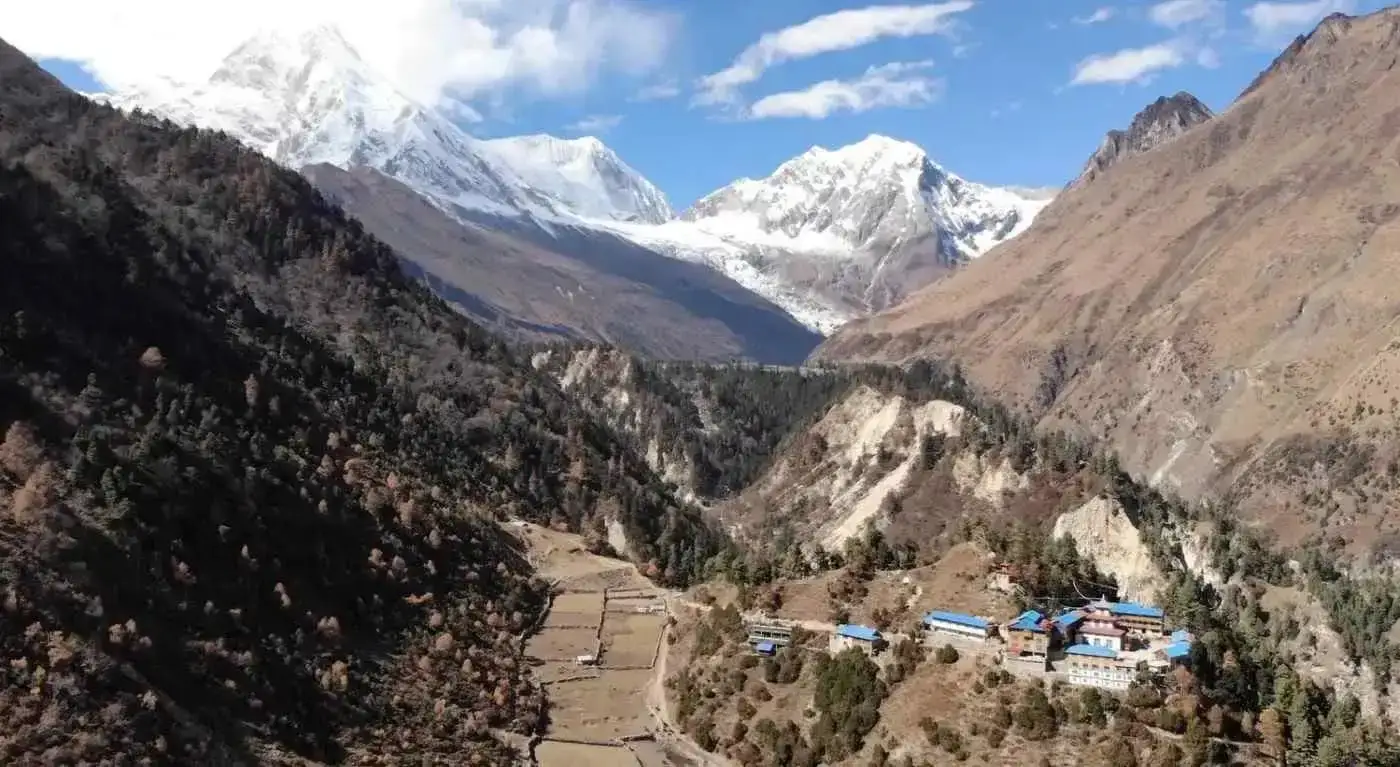
The Manaslu Circuit Trek during winter, from December to February, presents a different and more challenging adventure for the climbers. As you may know, the ascent turns into a real winter wonderland, and at the same time, it brings a lot of challenges.
- Weather and Temperature: To trek during winter is to subject oneself to enduring very low temperatures. At foothills and lowlands, temperatures fluctuate between 5 degrees centigrade and 10 degrees centigrade, while at plateaus and highlands, night temperatures fall between -10 degrees centigrade and -15 degrees centigrade. In this case, people need warm clothes, thermal wear, and appropriate-quality sleeping bags, as well as other insulated wear, to keep warm.
- Scenic Beauty: In this season, the mountains of the Manaslu region are covered with a white veil of snow, which makes the surroundings look quite serene and beautiful. Frozen peaks, icy freshwater streams, and waterfalls are perfect for subject matter photographers. I would recommend it for those who are willing to be introduced to the untouched snowy environment, still as otherworldly as it can get.
- Crowds and Tranquility: The harsh winter environment results in fewer trekkers during the cold seasons, which makes it a perfect time to enjoy solitude. There are comparatively less crowded and less noisy trails, which directly give one an opportunity to be with nature if one seeks a lonely trek in the middle of winter beauty out there.
- Wildlife and Culture: Animals also rest during winter, some moving to other areas in search of warmth while some hibernate. Cultural events and local festivals are also less frequent, which also contributes to stillness. Nevertheless, the fair-weathered scenery during winter makes this region terrific for viewing mountains such as Mount Manaslu, among others, thus making more dramatic scenery.
- Challenges and Risks: It can be noted that winter trekking has its fair share of challenges. Both snow and ice make a way difficult to access, and the chance of avalanche renders movement a very risky venture. Trekkers should expect some changes in the projected plan, such as trail closures as well as restricted weather conditions. The cold also poses a health risk, for example, through frostbite; thus, people have to be well prepared for the worst.
- Accommodation and Preparation: As previously noted, establishments such as teahouses and lodges may be unavailable or have limited operations during the winter season because of the unfavorable weather conditions. In preparations for the trip, one must make sure that there’s accommodation as well as prepare for the harsh terrain. Winter gear, as well as some specific equipment, is required in order to make the trek safe and enjoyable.
One outstanding and relatively untouched experience of hiking the Manaslu Circuit is during winter since this is characterized by snow and seclusion. In this context of scenery, despite the hazards associated with the season, it is still possible to enjoy the mountains of the Himalaya range in their winter glory if precautions are taken during the planning of the trek.
Manaslu Circuit Trek in Autumn: A Prime Trekking Season (September to November)
The best season to do the Manaslu Circuit Trek is the autumn season; the time between September and November falls perfectly in between and therefore can be considered to be the best season to do this trekking circuit, as people favor it over the spring season.
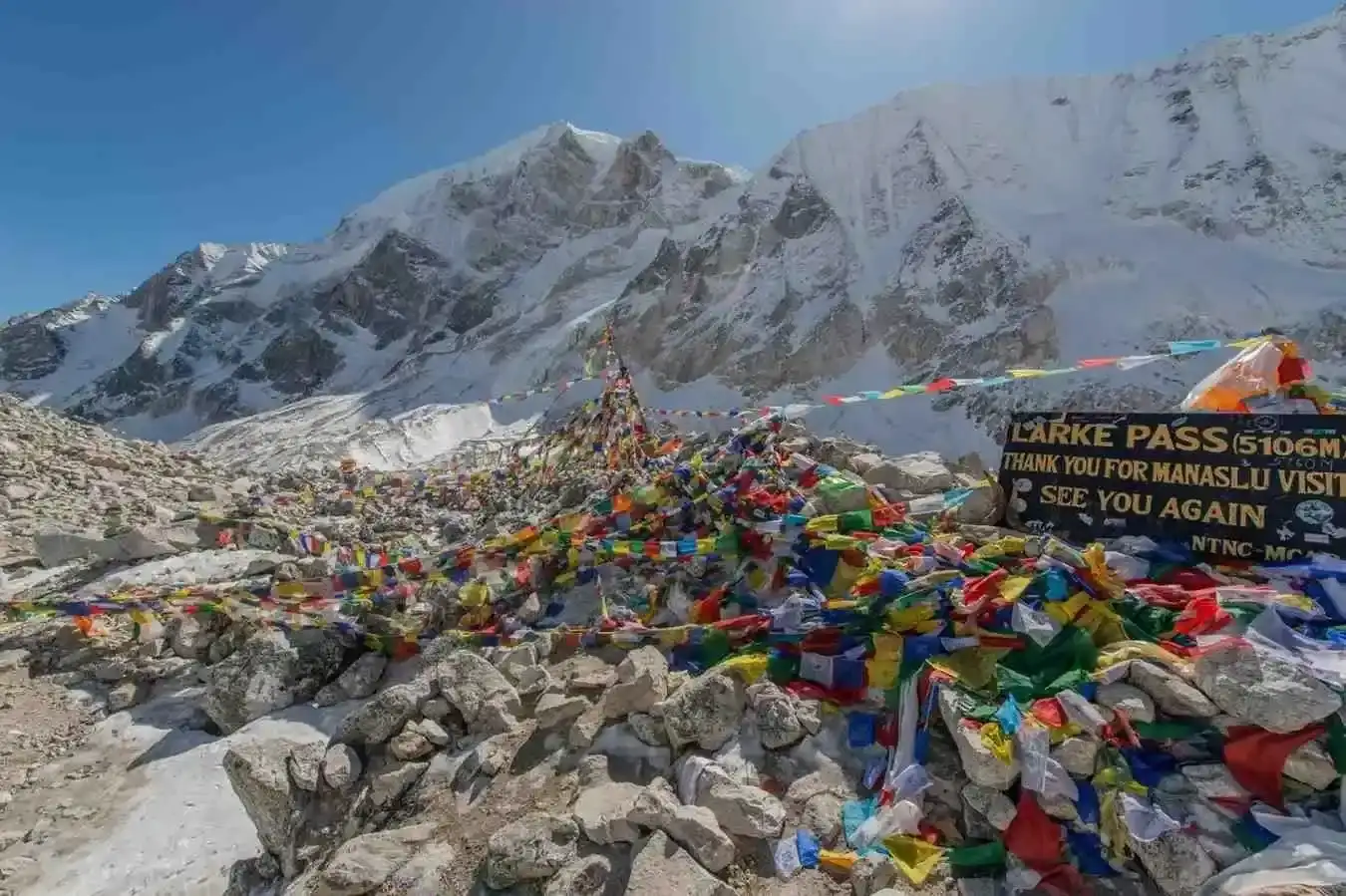
- Weather and Temperature: September, October, and the first half of November seem to be the most enjoyable, as the weather is rather warm but not extremely hot, and the differences between the daytime and nighttime temperatures are relatively small at all the altitudes. At low altitudes the climate varies between 10 degrees Celsius and 25 degrees Celsius, which provides a good trekking environment. When ascending higher, the temperatures drop to a range of 0°C to 10°C, with chances of falling as low as -5°C at the Larkya La Pass. Generally, there is not much rainfall, and sometimes in the late part of the year, especially in October, there is likely to be snow.
- Scenic Beauty: As is stated, this season reveals the Manaslu region at its best. The weather is perfect in the autumn season, offering a clear visibility of touching snow-capped mountains like Mount Manaslu, Ganesh Himal, Himchuli, and Shringi Himal. The trail, which passes along the Budi Gandaki River, offers magnificent views of waterfalls and green vegetation typical to the area, giving the experience a serene look.
- Flora and Fauna: Autumn is a good time, as plants like rhododendrons and flowers like the alpine ones are surpassed by the riot of colors; red, orange, and yellow mark the landscape during the trek. Something you may not like about the weather is that it is cool when taking photographs and enjoying the beauty of Mother Nature.
- Cultural Experiences: Autumn, in particular, falls during the Dashain festival, which provides a comparatively lesser number of trekkers an opportunity to witness the Nepali festivities. This festival enhances the diversification of the trek through cultural exposure, where one is given the opportunity to view local celebrations, customs, some cultural values, and more, especially the cultural blush of the region.
- Challenges: While there are many advantages to traveling during autumn, the main disadvantage is that this is a popular time for trekking, and therefore it can be crowded as well as provide a limited choice of lodges. More trekkers change the nature of the treks, also causing issues with the permits they have to obtain.
- Preparation: Some of the necessary things to consider while planning an autumn trek are that you should book your stay, your guide, and your permits as early as possible. Set yourself up for possible temperature fluctuations and a snowfall by dressing appropriately.
The autumn season on the circuit trek offers one of the best treks in the Himalayas with good weather, beautiful scenery, and excellent cultural experiences. Although having to deal with the first problem, related to the influx of travelers during the peak season, one will obtain a highly memorable and fulfilling experience while visiting the region of Manaslu.
Conclusion
The Manaslu Circuit Trek is one of the most colorful treks in the world that is full of diverse attractions, beautiful terrains and natural outlooks, and colorful seasons and climates. Timing your trek is relative to what one wants in the experience; the best time for the trek could be in the morning or afternoon.
- Spring (March to May): As for the climate and natural landscapes, spring is good for climate lovers and vegetation fans. It lightly takes the blooming rhododendrons, the green foliage, and the clear skies and less crowded trail this time of year. Of course, this season brings warmth and stunning landscapes, but it is actually a high season; thus, it is better to book in advance.
- Monsoon (June to August): The major advantage is that during the monsoon it does not only become a paradise with green scenery but also does not attract as many trekkers. This is probably one of the best times to go trekking because it is quiet but has some disadvantages, like the trails being muddy, the presence of leeches, and the probability of landslides. Freedom hours appear, and if you are equipped for a battle with nature, you will enjoy a fairy tale.
- Autumn (September to November): The best season to trek is the autumn season. A trekker is assured of clear weather, good temperatures, and proper views of the mountains in this season. The beautiful colors of the fall and the cultural festivities associated with the region add more value to the trekking. However, this friendly season is overcrowded with numerous hikers and difficulties in making bookings; therefore, timely planning is crucial.
- Winter (December to February): Winter offers the Manaslu Circuit pristine, snowy scenery for the wannabe lone wanderers and snow enthusiasts. Still, the rather low temperatures and possible obstacles in the form of snow can be rather rewarding, should one want to traverse through some rather stunning snowy landscapes.
This is one of the many attractions of this circuit; it never gets old when it comes to seasonality, ranging from the striking colors in the spring season to the cold, serene snowy season. The goal and the preference hence make choosing the right time for your trek an important factor so that the trek can be aligned to the goals. As a result, it is important to prepare and plan well regardless of the season so as to minimize risks and have the best of trekking adventures. Select the season that is more appropriate to your adoration and appreciation of the gorgeous views of the Manaslu region, and for women seeking a safe and empowering adventure, explore our Women Adventure agency for tailored women-only trekking experiences.
For trekkers still unsure which route to choose, understanding the key differences between the Manaslu Circuit vs Annapurna Circuit can make trip planning easier and more confident.