
Tabel Of Contents
- Why Did Nepal Ban Solo Trekking?
- What Are the 2026 Mandatory Guide Rules?
- Where Does the Ban Apply? Region-by-Region Breakdown
- Exceptions: Where You Can Still Trek Without a Guide
- Can You Still Trek Independently in Nepal?
- How to Plan a Trek in Nepal After the Solo Trekking Ban?
- How Much Does It Cost to Hire a Guide in Nepal?
- What This Policy Means for Solo Female Trekkers?
- How Women Adventures Makes It Simple?
- FAQs About the Solo Trekking Ban in Nepal
Yes, solo trekking is banned in Nepal on most major trekking routes. To be precise, what is banned is trekking alone without a licensed guide or registered agency. If you travel to Nepal as a solo woman and hire a private guide, you are still a solo trekker — you are simply a compliant one. The ban does not stop you from trekking independently; it requires that you have professional support while doing so. Since April 1, 2023, the Government of Nepal and the Nepal Tourism Board require foreign trekkers to hire a licensed guide through a registered trekking agency when trekking in national parks and conservation areas. However, some exceptions still exist, including parts of the Everest region and day hikes near cities. This mandatory guide policy is now strictly enforced for the 2026 trekking season across all of Nepal’s national parks and conservation areas, including the Annapurna Circuit, Manaslu Circuit, and Langtang Valley.
If you are a woman planning a solo trek in the Himalayas, this requirement might sound like a setback at first. But here is the reality: the ban has actually created a safer, more structured trekking environment, especially for women travelling independently. Having a licensed guide means you have a trained companion who knows the terrain, speaks the local language, monitors altitude risks, and can coordinate emergency support if anything goes wrong.
This guide breaks down the 2026 rules, costs, regional exceptions, and what the ban specifically means for solo female trekkers from the US, UK, and Europe.
Why Did Nepal Ban Solo Trekking?
Nepal bans solo trekkers for two main reasons: trekker safety and local employment.
The Nepal Tourism Board reported that 390 tourists went missing or lost in the fiscal year 2019–20 alone. The Trekking Agencies’ Association of Nepal (TAAN) confirmed that between 10 and 15 solo trekkers go missing every year, and the overwhelming majority of fatalities and disappearances involved people trekking without a licensed guide. Altitude sickness, sudden weather changes, trail navigation errors, and landslides are all far more dangerous when no trained professional is present.
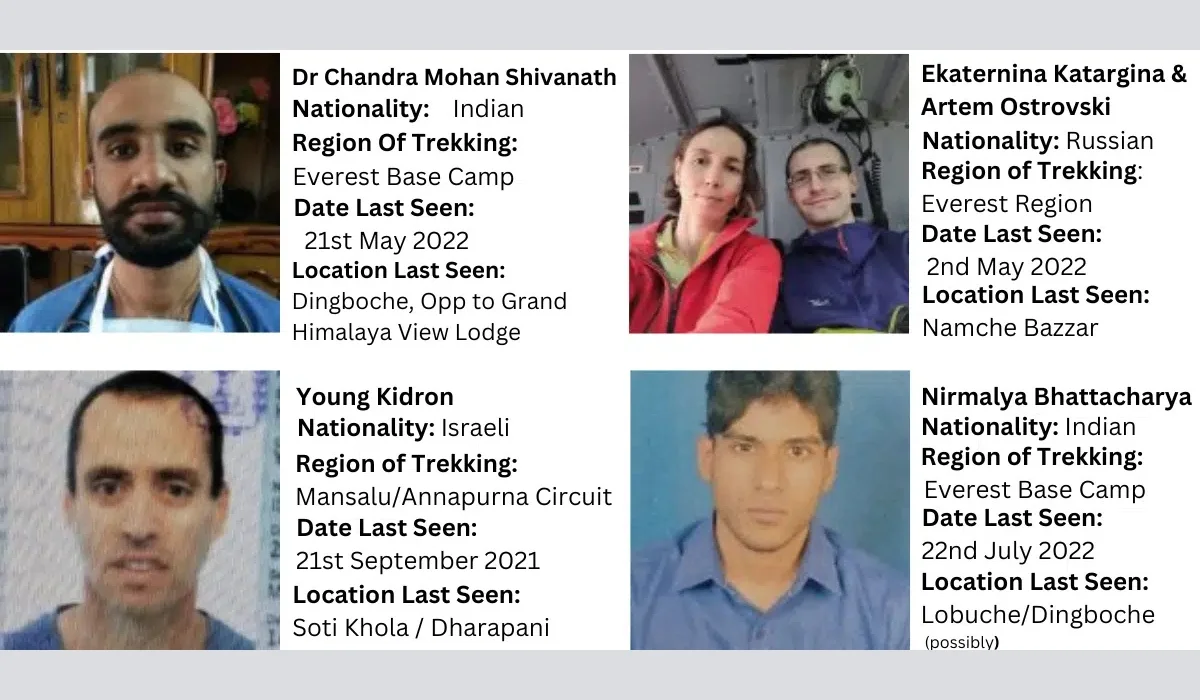
Trekking Agencies’ Association of Nepal (TAAN) had actually been advocating for a guide requirement since 2009. After years of deliberation and rising incident numbers, the Nepal Tourism Board officially implemented the ban on April 1, 2023. Nepal bans solo trekkers throughout the country, though enforcement has varied by region, leading to concerns about the safety of solo travellers and the potential impact on tourism revenue. The policy also aims to create employment for an estimated 40,000 or more local guides and porters, supporting mountain communities that depend on trekking tourism.
Importantly, the ban has not deterred visitors. According to the Kathmandu Post, 30,866 foreign trekkers completed the Annapurna Circuit in 2024 alone, a record number that shows Nepal’s trekking industry is thriving under the new rules. The trails are as popular as ever; the only difference is that every trekker now has professional support.
What Are the 2026 Mandatory Guide Rules?
The Nepal solo ban applies to every foreign national trekking in Nepal’s regulated areas. Here is exactly what the 2026 rules require:
- Licensed guide: Every trekker must be accompanied by a guide who holds a professional license issued by the Nepal Ministry of Tourism.
- Registered agency: The guide must be hired through a government-registered trekking agency. You cannot simply hire someone informally at a trailhead.
- TIMS card through agency only: The Trekkers’ Information Management System (TIMS) card can only be issued through a registered agency. The old Green TIMS card that allowed independent trekking has been permanently discontinued.
- Scope: The rule applies to all 12 national parks and 6 conservation areas in Nepal.
- Exemptions: This rule does not affect Nepali citizens.
- Penalties: Trekking without a registered guide can result in monetary fines (NPR 12,000 per person), removal from the trail, or blacklisting from future trekking permits.
To understand how dramatically things have changed, here is a quick comparison:
| Element | Before 2023 | 2026 Rules |
| Solo trekking | Allowed freely on all routes | Banned for all foreign nationals in regulated areas |
| TIMS card | Green card available independently | Only through registered agency |
| Guide requirement | Optional (except restricted areas) | Mandatory for all regulated routes |
| Enforcement | Minimal checkpoint verification | QR code scanning at checkpoints |
| Penalties | None for solo trekkers | Fines, trail removal, permit blacklisting |
Where Does the Ban Apply? Region-by-Region Breakdown
The mandatory guide rule covers 44 officially listed trekking trails across Nepal. In practice, it applies to virtually every major trekking destination. Here is a breakdown of the key regions:
| Region | Guide Required? | Permits Needed | Key Treks |
| Annapurna | Yes | ACAP + TIMS | Circuit, Base Camp, Poon Hill, Mardi Himal |
| Everest (Khumbu) | Not currently enforced | Trek Card + SNP | EBC, Three Passes, Gokyo |
| Langtang | Yes | NP Permit + TIMS | Valley Trek, Gosainkunda |
| Manaslu | Yes + min. 2 trekkers | RAP + MCAP + TIMS | Manaslu Circuit |
| Upper Mustang | Yes + min. 2 trekkers | RAP + ACAP + TIMS | Lo Manthang Trek |
| Upper Dolpo | Yes + min. 2 trekkers | RAP + NP Permit + TIMS | Shey Phoksundo, Dolpo Circuit |
| Lower Dolpo | Yes + min. 2 trekkers | RAP + NP Permit + TIMS | Phoksundo Lake Trek |
| Kanchenjunga | Yes + min. 2 trekkers | RAP + KCAP + TIMS | Kanchenjunga Circuit |
| Tsum Valley | Yes + min. 2 trekkers | RAP + MCAP + TIMS | Tsum Valley Trek |
| Nar-Phu Valley | Yes + min. 2 trekkers | RAP + ACAP + TIMS | Nar-Phu Circuit |
Note: Restricted areas (Manaslu, Upper Mustang, Dolpo, Kanchenjunga) require a minimum of two foreign trekkers plus a licensed guide. If you are travelling solo, agencies like Women Adventures can pair you with another woman trekker to meet this requirement.
Planning to decide between Nepal’s most popular long-distance routes? Read our detailed Manaslu Circuit vs Annapurna Circuit comparison for women trekkers.
Exceptions: Where You Can Still Trek Without a Guide
It is important to be honest: the guide requirement does not apply everywhere in Nepal. Trekking without a guide is still permitted in several areas, including the entire Everest/Khumbu region and day hikes near major cities. Here are the key exceptions:
Everest Region (Khumbu): The Khumbu Pasang Lhamu Rural Municipality rejected the Trekker Information Management System (TIMS) requirement from the Nepal Tourism Board to allow solo trekking. Instead of a TIMS card, trekkers purchase a local Trek Card (NPR 2,000, approximately $15 USD) and a Sagarmatha National Park permit (NPR 3,000, approximately $23 USD). This means Everest Base Camp, the Three Passes, and Gokyo Lakes remain technically accessible without a guide.
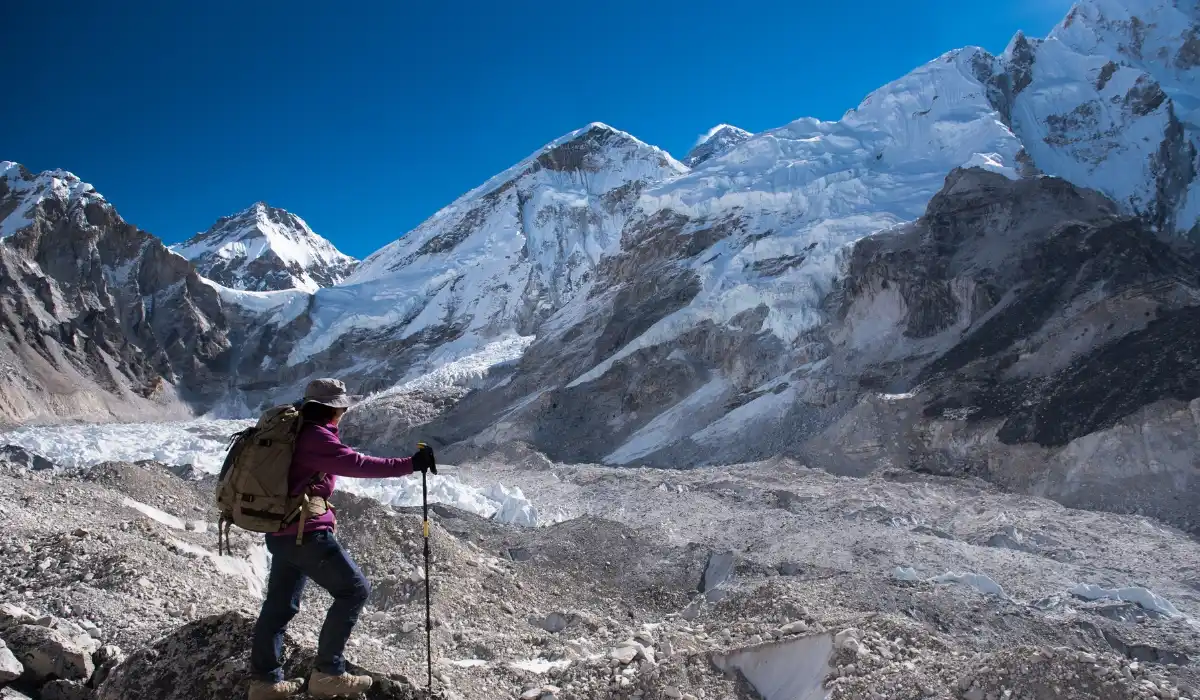
Day hikes near cities: Hiking around Kathmandu, Pokhara, Bandipur, Gorkha, and the Middle Hills does not require a guide or TIMS card. Short day hikes, such as Champadevi, Australian Camp, or the trails around Nagarkot, are exempt from the mandatory guide rule.
Looking ahead: TAAN and the Nepal Tourism Board are actively working toward making the mandatory guide and agency requirement compulsory across all trekking regions in Nepal, including those currently exempt. This means the Everest region exception and day-hike exemptions may be removed in future trekking seasons. If you are planning a trek for 2027 or beyond, always check the latest regulations before booking.
A word of caution for women: Even though the Everest region is technically open to solo trekkers, we still recommend having a guide. The stretch between Namche Bazaar and Gorak Shep involves remote, high-altitude sections where altitude sickness can escalate quickly. Having a trained guide who can monitor symptoms and coordinate evacuation is invaluable, especially for first-time high-altitude trekkers.
Can You Still Trek Independently in Nepal?
This is the question that matters most to experienced solo travellers, and the answer is more exact than a simple yes or no.
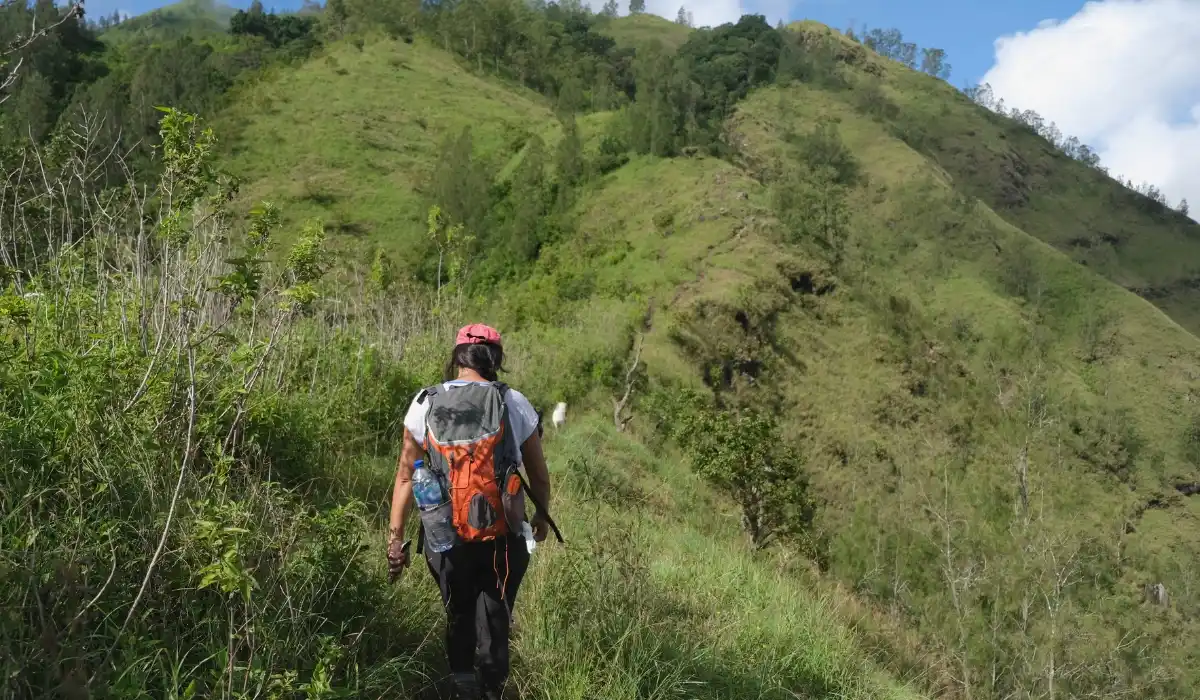
The short answer: you can no longer walk into Nepal, pick up a permit, and set off into the mountains alone. That era ended in 2023. But independent trekking is not dead – it has simply changed shape.
With a private guide, your trek still feels independent. You decide the pace, the daily distance, the rest stops, and the teahouse where you sleep. Your guide walks with you as a knowledgeable companion, not as a tour leader barking instructions at a group. Many women who initially resisted the idea of a guide later describe it as one of the best parts of their trek – having someone to share the quiet moments with, to explain the meaning of a prayer flag, or to order you the best dal bhat in a remote village.
For women who specifically want the social aspect, group treks remain an excellent option. For those who want solitude with safety, a private guide provides exactly that. You still value the independence you had as a solo trekker. Someone who can ensure your safe return home simply supports it.
How to Plan a Trek in Nepal After the Solo Trekking Ban?
If you are planning a trek in Nepal in 2026, the process is different from how it worked before the solo trekking restriction. Instead of organising permits and logistics independently, most trekkers now plan their trip through a registered trekking agency. Here is the step-by-step process.
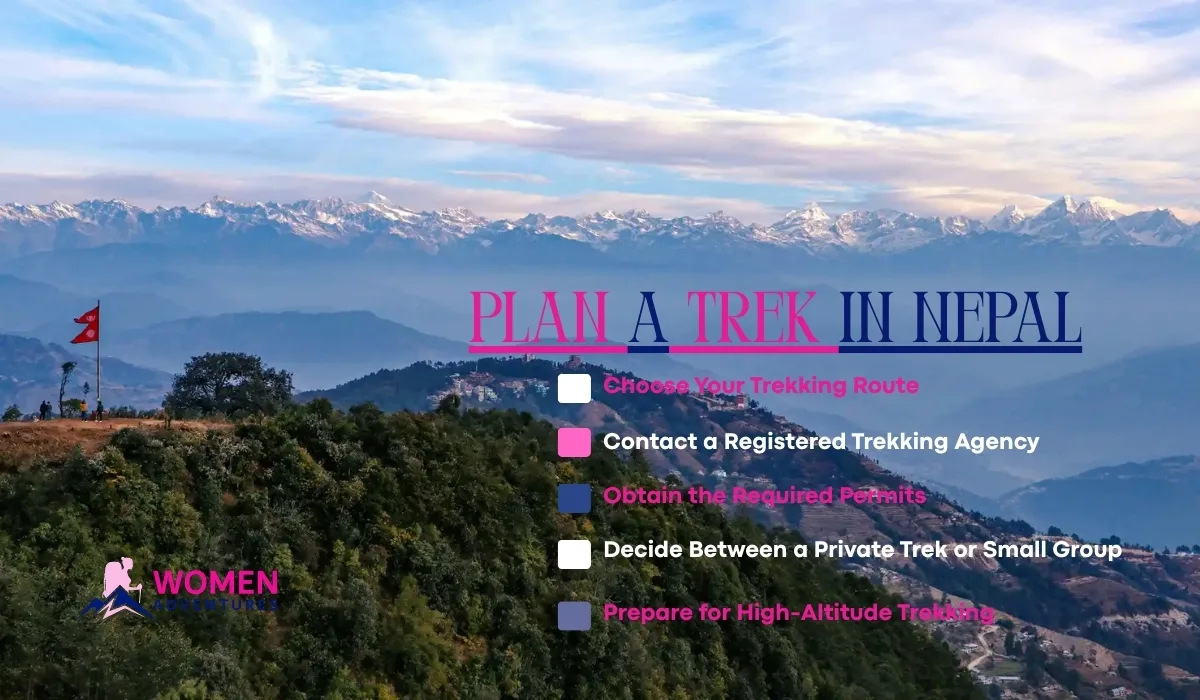
Step 1: Choose Your Trekking Route
First, decide which region you want to explore. Popular options for women include the Annapurna Circuit, Everest Base Camp, Langtang Valley, Manaslu Circuit, and Upper Mustang. Each region has different permits, difficulty levels, and seasonal considerations. If you are unsure which trek suits your experience level, our Manaslu Circuit vs Annapurna Circuit comparison can help you decide.
Step 2: Contact a Registered Trekking Agency
Since the guide requirement was introduced, foreign trekkers must arrange their trek through a government-registered agency. A trekking agency will assign a licensed guide, arrange all trekking permits, issue the TIMS (Trekkers' Information Management System) card, and help organise transportation and your daily itinerary. This ensures your trek fully complies with the 2026 regulations. At Women Adventures, we take care of all this for you, so you don't have to deal with Nepali bureaucracy or go to government offices.
Step 3: Obtain the Required Permits
Your agency will arrange all necessary permits on your behalf. Most treks require a TIMS card (NPR 2,000) and a National Park or Conservation Area Permit (NPR 3,000 each). Restricted areas such as Upper Mustang or Manaslu require special permits that cost significantly more, often exceeding NPR 10,000, depending on the specific area and duration of the trek. For a complete breakdown of costs in USD, GBP, and EUR, refer to the cost table earlier in this guide.
Step 4: Decide Between a Private Trek or Small Group
Even though guides are required, you still have full flexibility in how you trek:
- Private trek: Just you and your guide. Fully customisable itinerary. You control the pace, schedule, and daily plan. This option is the closest experience to the solo trekking of the past.
- Small group trek: Typically 4–8 trekkers. Lower cost per person. You can enjoy a social experience with other like-minded women. Women Adventures runs women-only group departures throughout the trekking season.
Many solo women travellers prefer a private guide because it preserves the independence they originally wanted while adding professional support and local knowledge.
Step 5: Prepare for High-Altitude Trekking
Finally, prepare for the physical realities of Himalayan trekking. Important preparations include proper altitude acclimatisation planning, investing in quality trekking gear, securing travel insurance that specifically covers helicopter evacuation in Nepal, and building your fitness before arrival. A good trekking guide will also monitor altitude sickness symptoms during the trek and adjust the itinerary if needed.
How Much Does It Cost to Hire a Guide in Nepal?
One of the first questions women planning a Nepal trek ask is, 'How much will the trip actually cost?' Here is a transparent breakdown:
| Item | USD | GBP | EUR |
| Licensed trekking guide (per day) | $25 – $40 | £20 – £32 | €23 – €37 |
| Porter-guide (per day) | $20 – $30 | £16 – £24 | €18 – €28 |
| TIMS Card | ~$15 | ~£12 | ~€14 |
| National Park / Conservation Permit | ~$23 each | ~£18 each | ~€21 each |
Restricted Area Permit Costs (vary by region):
| Restricted Area | Permit Cost | Additional Notes |
| Upper Mustang | $500 for first 10 days, then $50/day | Min. 2 trekkers required |
| Upper Dolpo | $500 for first 10 days, then $50/day | Min. 2 trekkers required |
| Lower Dolpo | $10 per week | Min. 2 trekkers required |
| Manaslu (Sep–Nov) | $100 per week, then $15/day | Min. 2 trekkers + MCAP ($30) |
| Manaslu (Dec–Aug) | $75 per week, then $10/day | Min. 2 trekkers + MCAP ($30) |
| Tsum Valley | $40 per week | Min. 2 trekkers required |
| Nar-Phu Valley (Sep–Nov) | $100 per week | Min. 2 trekkers + ACAP |
| Nar-Phu Valley (Dec–Aug) | $75 per week | Min. 2 trekkers + ACAP |
| Kanchenjunga | $20–$25 per week | Min. 2 trekkers + KCAP |
Here is a useful way to think about it: the daily cost of a licensed guide ($25–$40) is a fraction of what a helicopter rescue costs if something goes wrong while trekking alone. Emergency evacuations in Nepal typically run between $5,000 and $10,000 USD. A guide is not just a legal requirement; it is the most affordable safety measure available to you.
Women Adventures bundles all permits, TIMS cards, and guide arrangements into our trek packages, ensuring transparent, upfront pricing with no hidden fees. You can talk to a Woman Trek expert for a personalised cost estimate.
What This Policy Means for Solo Female Trekkers?
This section is the part no other guide covers, and it matters.
For women who have been dreaming of trekking Nepal alone, the ban might initially feel like a loss of independence. You wanted to prove you could do it by yourself. That feeling is valid. But here is the truth: the strength of your trek was never about handling logistics alone. It was about the physical challenge, the mental resilience, the Himalayan landscape, the cultural encounters, and the personal transformation. All of that remains entirely yours, even with a guide walking alongside you.
In fact, the mandatory guide rule has made Nepal significantly safer for solo female trekkers in several important ways:
- You are never truly alone on remote trail sections. Before the ban, solo women trekkers could find themselves walking hours between villages with no other person in sight. Now, you have a trained professional with you who knows the terrain, the weather patterns, and the nearest shelter at all times.
- Female guides are increasingly available. Nepal’s guiding industry is changing. Women Adventures offers certified female trekking guides, so you can trek with a woman who understands your needs, your comfort level, and your pace. This arrangement is not the same as being assigned a random male porter.
- Private guide means private experience. Being guided does not mean joining a 20-person tour group. You can hire a private guide through Women Adventures and still set your pace, choose your rest stops, decide when to photograph a sunrise, and control every aspect of your daily schedule.
- Emergency coordination is built in. Licensed guides carry communication equipment and have direct agency links for helicopter evacuation. If you develop altitude sickness symptoms, your guide can recognise the early signs and act before it becomes critical.
If you want to understand more about what daily life looks like as a solo woman travelling in Nepal, read our guide on what every solo female traveller needs to know.
How Women Adventures Makes It Simple?
Women Adventures is a women-owned, women-led trekking company based in Nepal. We exist specifically to make Himalayan trekking accessible, safe, and empowering for women.
We handle every logistical requirement of the 2026 trekking rules when you book with us
- All permits, including TIMS (Trekkers' Information Management System), national park permits, conservation area permits, and restricted area permits, are arranged and included in your package.
- A licensed, experienced guide is assigned to your trek. You can request a female guide.
- You choose between private treks (just you and your guide) or small women-only group treks.
- We offer transparent pricing with no hidden costs. The price you see includes everything you need to be fully compliant with the 2026 regulations.
- For restricted areas requiring two trekkers, we can pair you with another solo woman so you both meet the requirement without compromising your independence.
Ready to plan your Nepal trek? Talk to a Woman Trek Expert and get a personalised itinerary and quote.
FAQs About the Solo Trekking Ban in Nepal
Is Solo Trekking Still Banned in Nepal in 2026?
Yes. The mandatory guide rule introduced in April 2023 remains fully active in 2026. All foreign trekkers must hire a licensed guide through a registered agency for treks in national parks and conservation areas.
Can Women Trek Solo in Nepal?
Yes, but you need a licensed guide with you. You can absolutely trek as a solo woman with a private guide rather than joining a group. The experience remains personal and independent; the only difference is that you have professional support.
Is the Everest Base Camp Trek Exempt from the Ban?
Partially. The Khumbu region allows solo trekking with a local Trek Card (NPR 2,000) and a Sagarmatha National Park permit instead of a TIMS card. However, high-altitude risks make a guide strongly recommended, even where not legally required, as they can provide essential support in navigating challenging terrains and responding to altitude sickness.
How Much Does a Trekking Guide Cost in Nepal?
Licensed guides charge between $25 and $40 per day, depending on experience and route difficulty. Porter-guides, who carry some gear and also guide you, cost $20 to $30 per day.
Can I Hire a Female Guide in Nepal?
Yes. The number of certified female trekking guides in Nepal is growing. Women Adventures offers female guides as a standard option for women who prefer trekking with another woman.
What Happens if I Trek Without a Guide?
You risk monetary fines (NPR 12,000 per person), removal from the trekking route, and potential blacklisting from future trekking permits in Nepal.
Do I Need a Guide for Day Hikes Near Kathmandu or Pokhara?
No. Day hikes around cities, including trails near Kathmandu, Pokhara, Bandipur, and Gorkha, are exempt from the mandatory guide requirement.
Are Nepali Citizens Affected by the Ban?
No. The mandatory guide rule applies exclusively to foreign nationals. Nepali citizens can trek independently.